
Seoraksan National Park Guide: Best Hikes, Tips & When to Visit
Plan your trip to Seoraksan National Park with this year‑round guide. Best hikes, fall foliage tips, how to get there, where to stay, and what to expect.
Seoraksan National Park Guide (2026): Best Hikes, When to Visit & How to Plan Your Trip
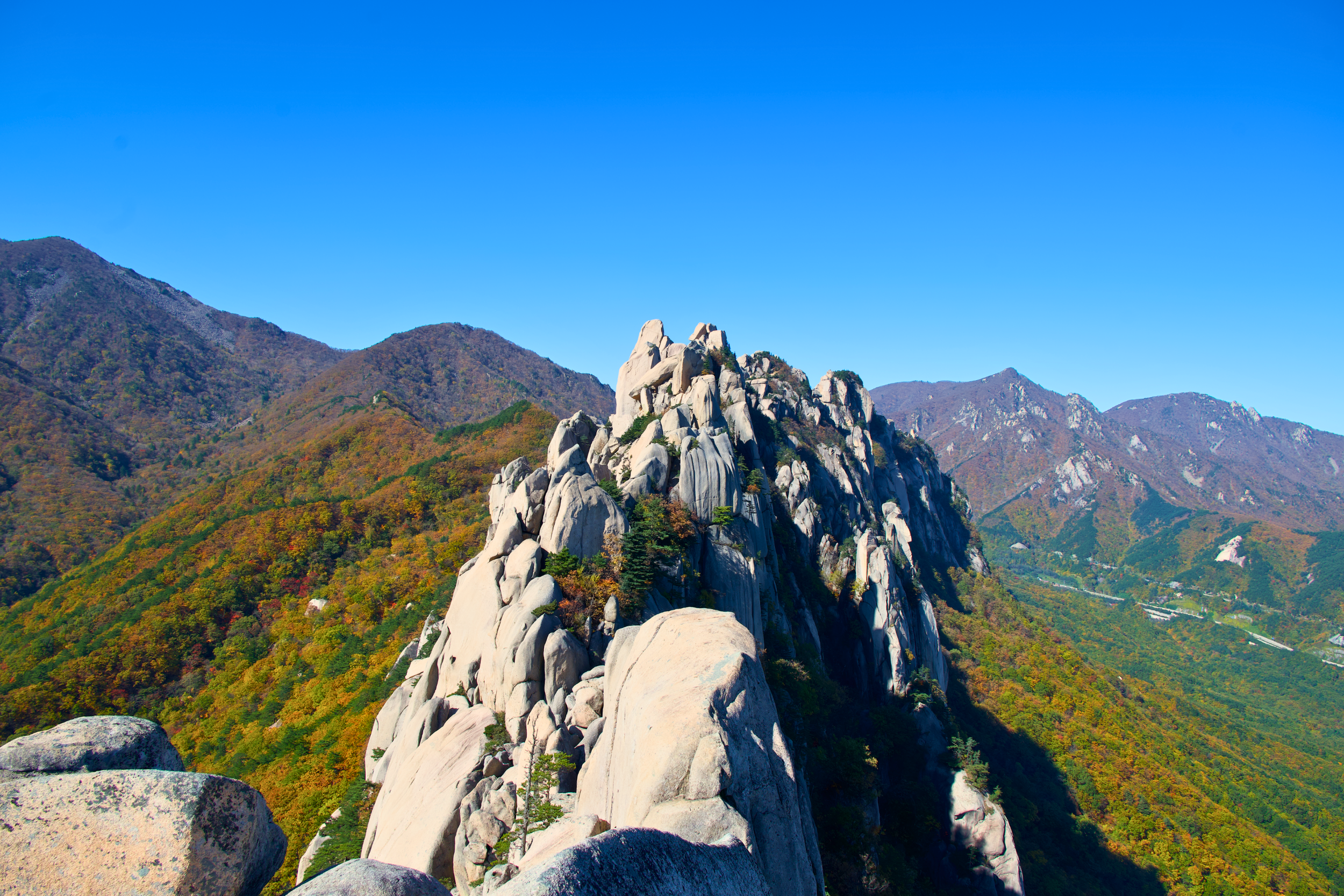
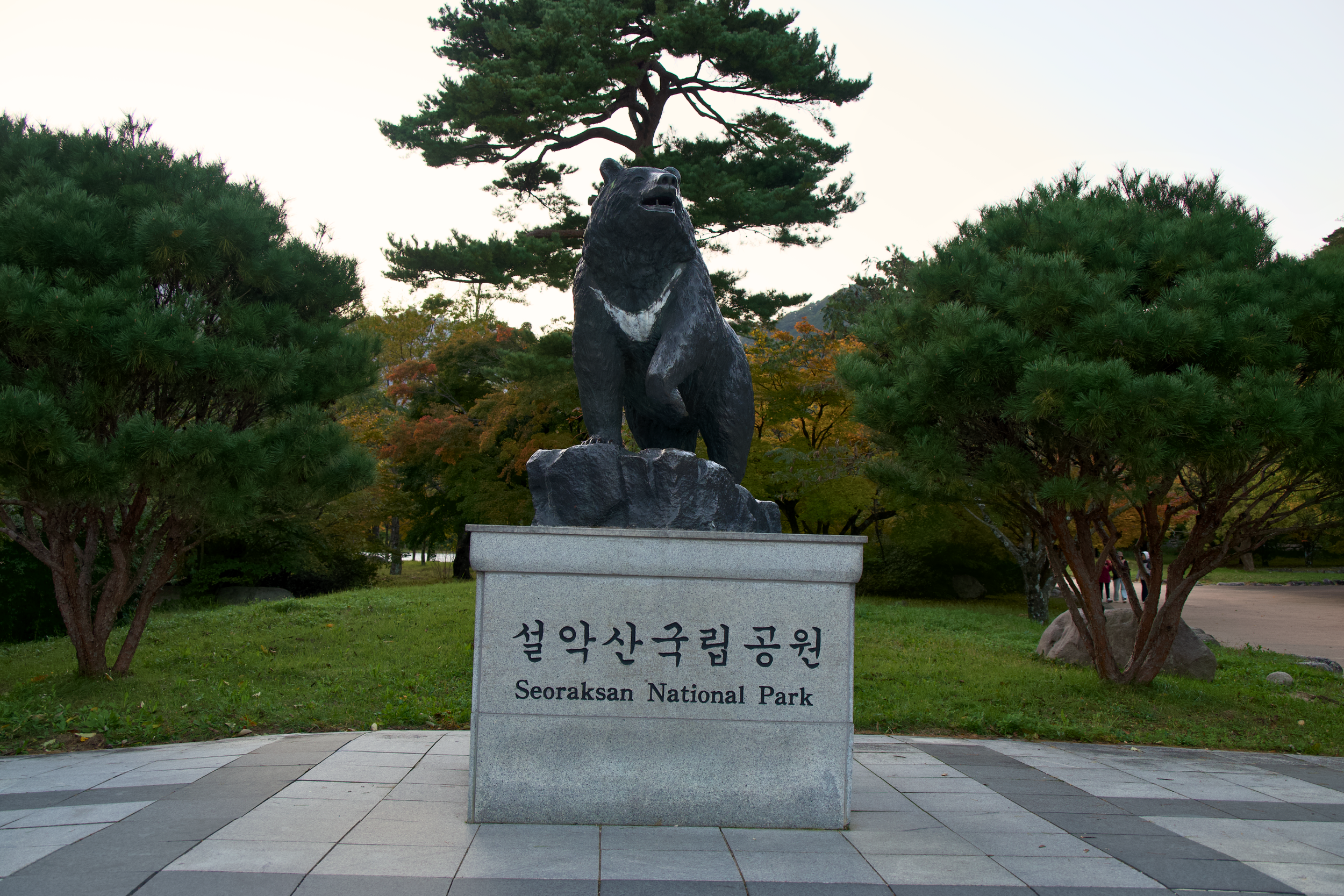
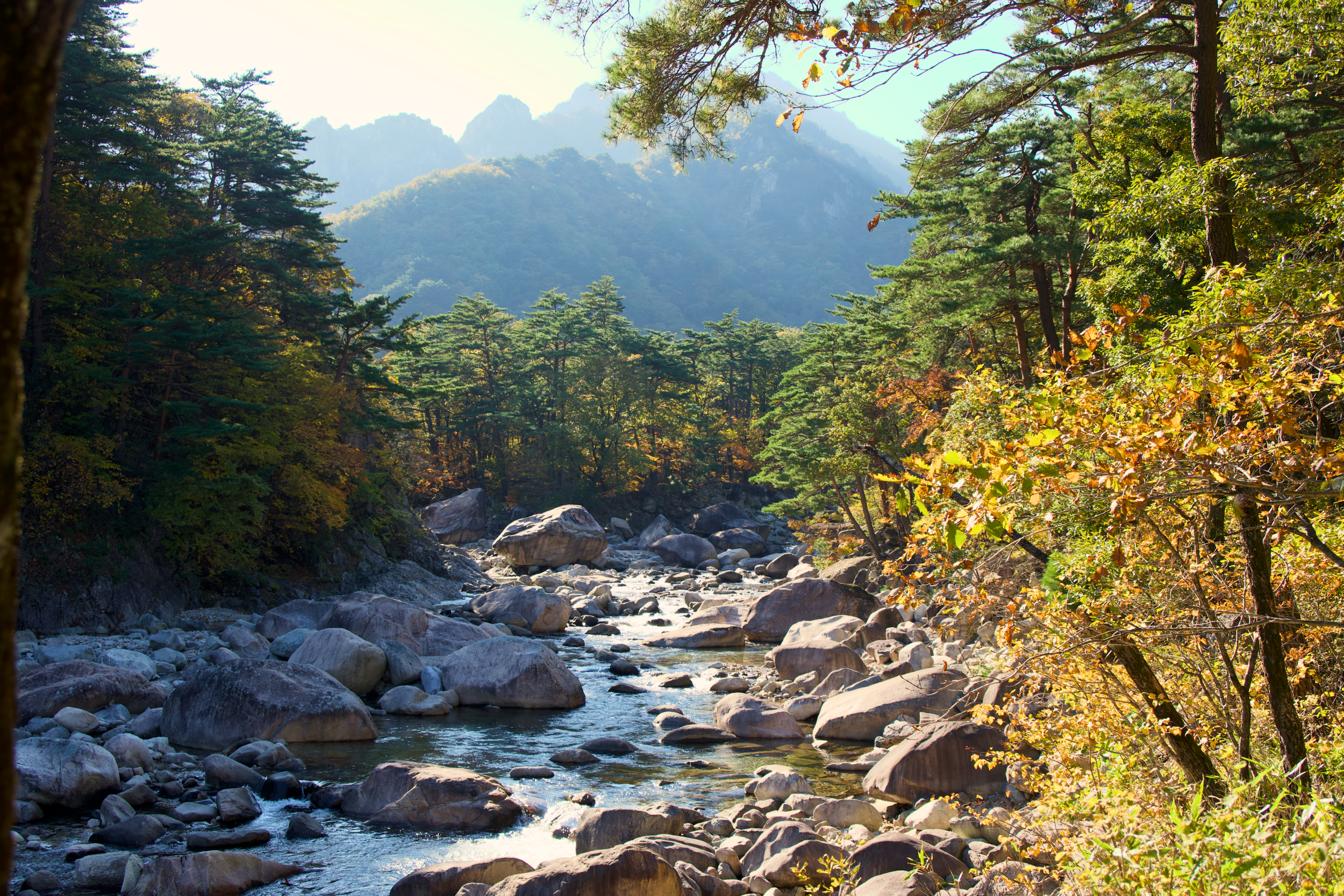
Seoraksan National Park is one of those places that immediately feels bigger than the photos, the granite peaks, the quiet valleys, the way the light hits the foliage in fall. It’s dramatic without being overwhelming, and accessible without being crowded every second of the day. Whether you’re planning your first trip to Korea or adding Seoraksan onto a longer itinerary, this is one national park that consistently lives up to the hype.
I based myself in Sokcho, taking the local buses into the park each morning and hiking three of the most popular trails: Towangseong Falls Observatory, Ulsanbawi, and Biseondae. Each one offered something different, a viewpoint, a challenge, a quiet walk, and together they gave me a full picture of what Seoraksan is like across different parts of the park.
What surprised me most was how easy the logistics were. You don’t need a car, you don’t need to speak Korean, and you don’t need to be an expert hiker. The buses run constantly, the trails are well‑marked, and the park layout is intuitive. It’s one of the few national parks where you can go from downtown Seoul to a major trailhead in under three hours.
If you’re searching for the best hikes in Seoraksan, how to get from Seoul to Seoraksan, or what the park looks like in peak fall, this guide covers everything you need.
This post contains affiliate links. If you book through my links, I may earn a small commission at no extra cost to you. It helps keep this blog going, and I only ever recommend things I'd use myself.
How to Get to Seoraksan National Park
Seoraksan is located in Gangwon Province, just outside the coastal city of Sokcho. It’s one of the easiest national parks in Korea to reach without a car, which is part of why it’s so popular with both locals and travelers. If you’re staying in Seoul, you can be at the park entrance in under three hours.
From Seoul to Sokcho (Fastest Route)
The most common way to reach Seoraksan is to travel from Seoul → Sokcho, then take a local bus into the park.
Best option:
Express Bus from Seoul Express Bus Terminal → Sokcho Express Bus Terminal
Duration: ~2 hours 15 minutes
Cost: Affordable
Frequency: Very frequent
Once you arrive in Sokcho, the city is compact and easy to navigate.
From Sokcho to Seoraksan (Local Bus)
This is the part that surprises people - it’s incredibly easy.
Take Bus 7 or 7‑1 from Sokcho to Seoraksan Sogongwon (the main entrance)
Duration: ~25–30 minutes
Cost: Very cheap
Frequency: Every 10–15 minutes during peak seasons
Tip: If you’re visiting in the fall, take the earliest bus you can. Crowds build fast.
Driving to Seoraksan
If you prefer to rent a car, the drive from Seoul takes about 2.5–3 hours, depending on traffic.
Parking is available at Sogongwon
Arrive early in the fall - lots fill up by mid‑morning
Guided Tours from Seoul
If you want a no‑logistics day trip:
These are great if you’re short on time or don’t want to navigate buses.
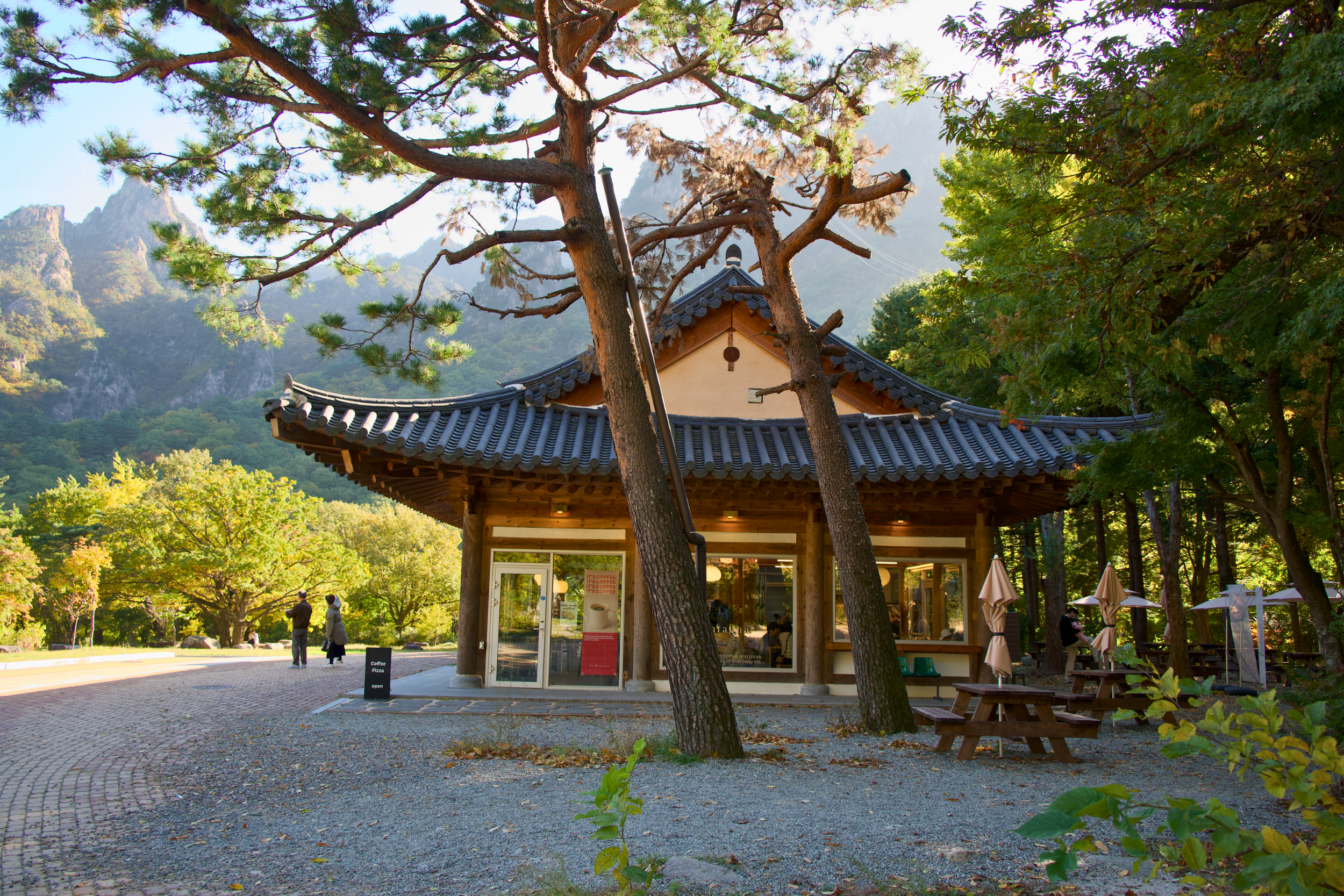
Where to Stay in Sokcho
Where to Stay in Sokcho
Sokcho is the best base for visiting Seoraksan. It’s close, compact, and easy to navigate, the kind of place where you can finish a hike, grab dinner, and be back at your hotel before your legs fully realize what you put them through. Most travelers stay near the bus terminal, the beach, or Yeongrangho Lake.
Best Areas to Stay
Near Sokcho Bus Terminal - easiest for early buses to Seoraksan
Near Sokcho Beach - great for sunsets and food
Near Yeongrangho Lake - quieter, scenic, peaceful
Recommended Hotels & Guesthouses
Staying Near the Sokcho Express Bus Terminal (Most Convenient)
If you want the easiest mornings, stay near the Sokcho Express Bus Terminal. This area is all about efficiency: quick access to Bus 7 or 7‑1, convenience stores, coffee, and restaurants.
Why this area works:
Walkable to the local bus stop
Fastest access to Seoraksan in the morning
Affordable hotel options
Great for early hikers
Perfect for early morning park access
Good picks in this area:
Staying Near Sokcho Beach (Most Scenic)
If you prefer scenery over convenience, the Sokcho Beach area is the better choice. The beach is wide, clean, and quiet in the mornings, perfect for a sunrise walk or a slow breakfast before heading into the park.
Why this area works:
Ocean views
Great cafés and restaurants
Relaxing atmosphere
Easy bus access (just slightly farther)
This is a great pick if you’re combining Seoraksan with a more relaxed coastal stay.
Good picks near the beach:
The House Hostel (This is where I stayed and LOVED it)
Where to Stay for Fall Foliage Season
Fall is peak season, and hotels fill up fast — not because of international travelers, but because Koreans travel hard during foliage season.
Quick tips:
Book at least 2–4 weeks ahead
Prioritize walkability to the bus stop
Expect higher prices near the beach
Terminal area = best for early starts
🚗 Gear Up: Car Rental
If you choose to rent a car to get around this area of South Korea, I usually book through Expedia and compare a half-dozen options in under five minutes.
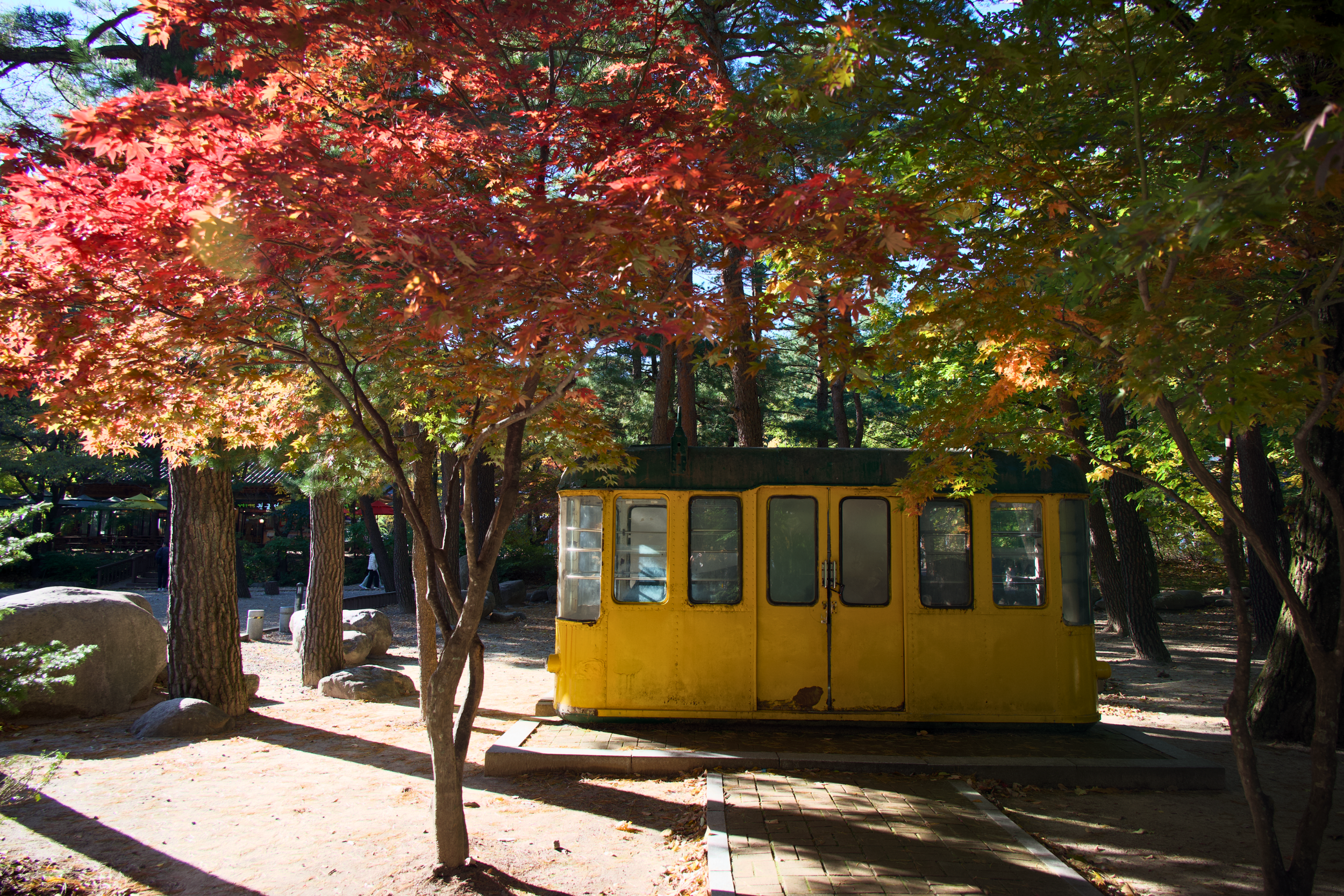
Best Things To Do In Seoraksan
Best Hikes & Things to Do in Seoraksan National Park
Ulsanbawi Rock (Most Iconic Hike)
Distance: ~3.8 miles round‑trip Time: 3–4 hours Difficulty: Hard (lots of stairs) Trailhead: Sogongwon → Sinheungsa Temple
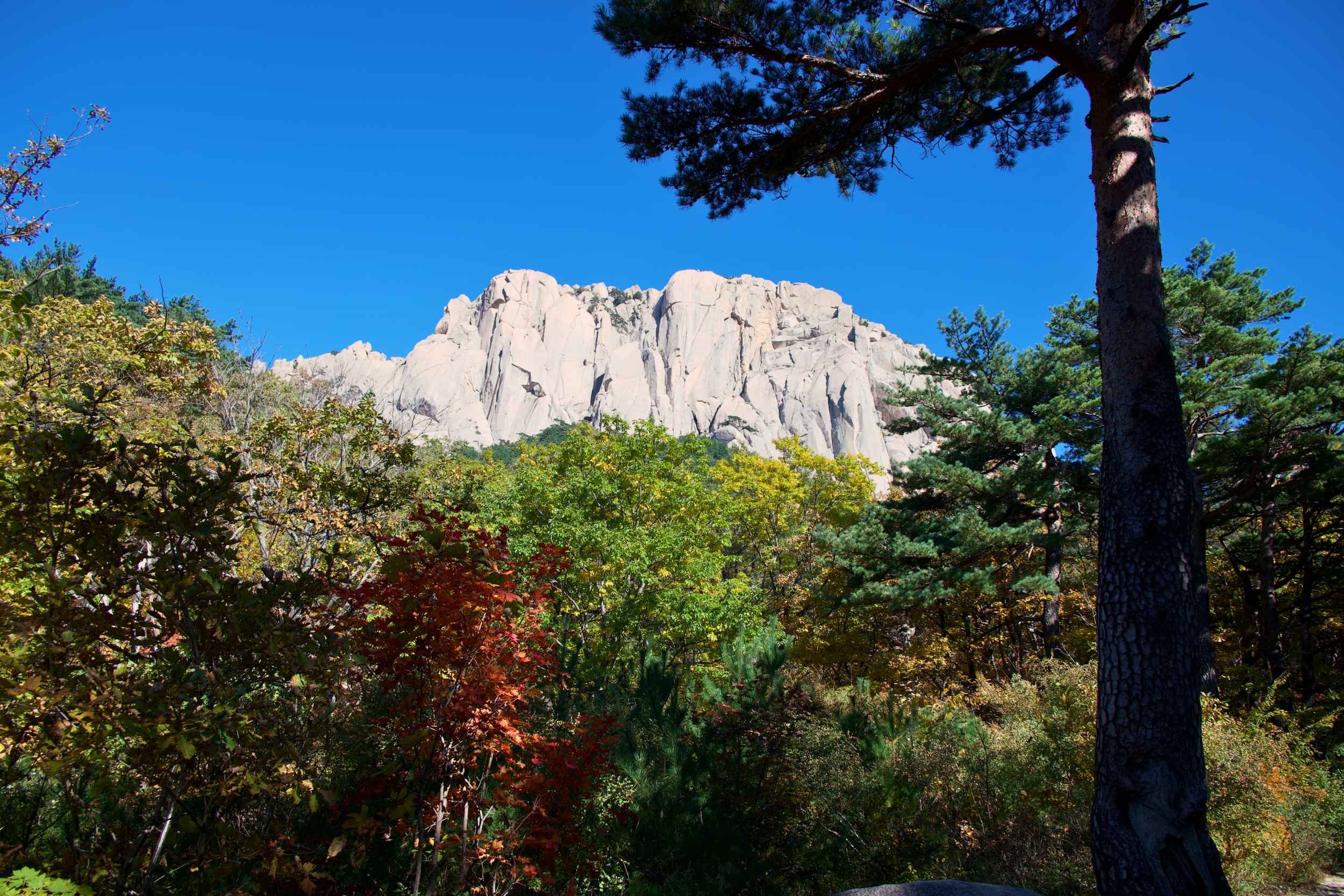
Ulsanbawi is the hike everyone talks about, the granite ridge you see in most photos of Seoraksan. The trail starts gently, passing Sinheungsa Temple, then gradually turns into a long staircase climb. The final stretch is steep but safe, with railings the entire way.
Why people love it:
The ridge views are incredible
The stairs are tough but manageable
The summit feels earned
It’s the most “Seoraksan” view you can get
Tip: Start early. This trail gets crowded by mid‑morning, especially in fall.
Biseondae Rock (Easiest + Most Scenic Walk)
Distance: ~2 miles round‑trip Time: 1–1.5 hours Difficulty: Easy Trailhead: Sogongwon
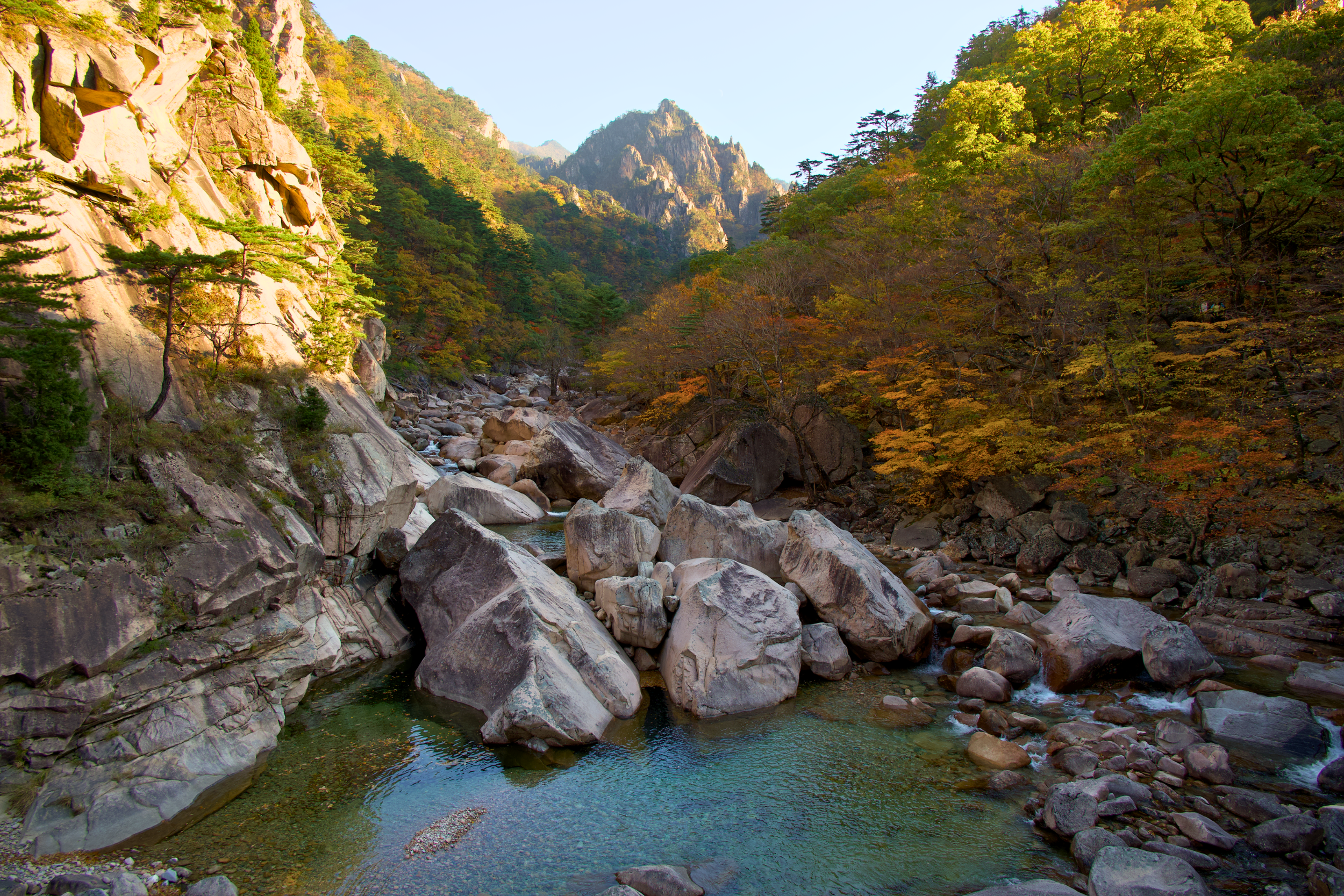
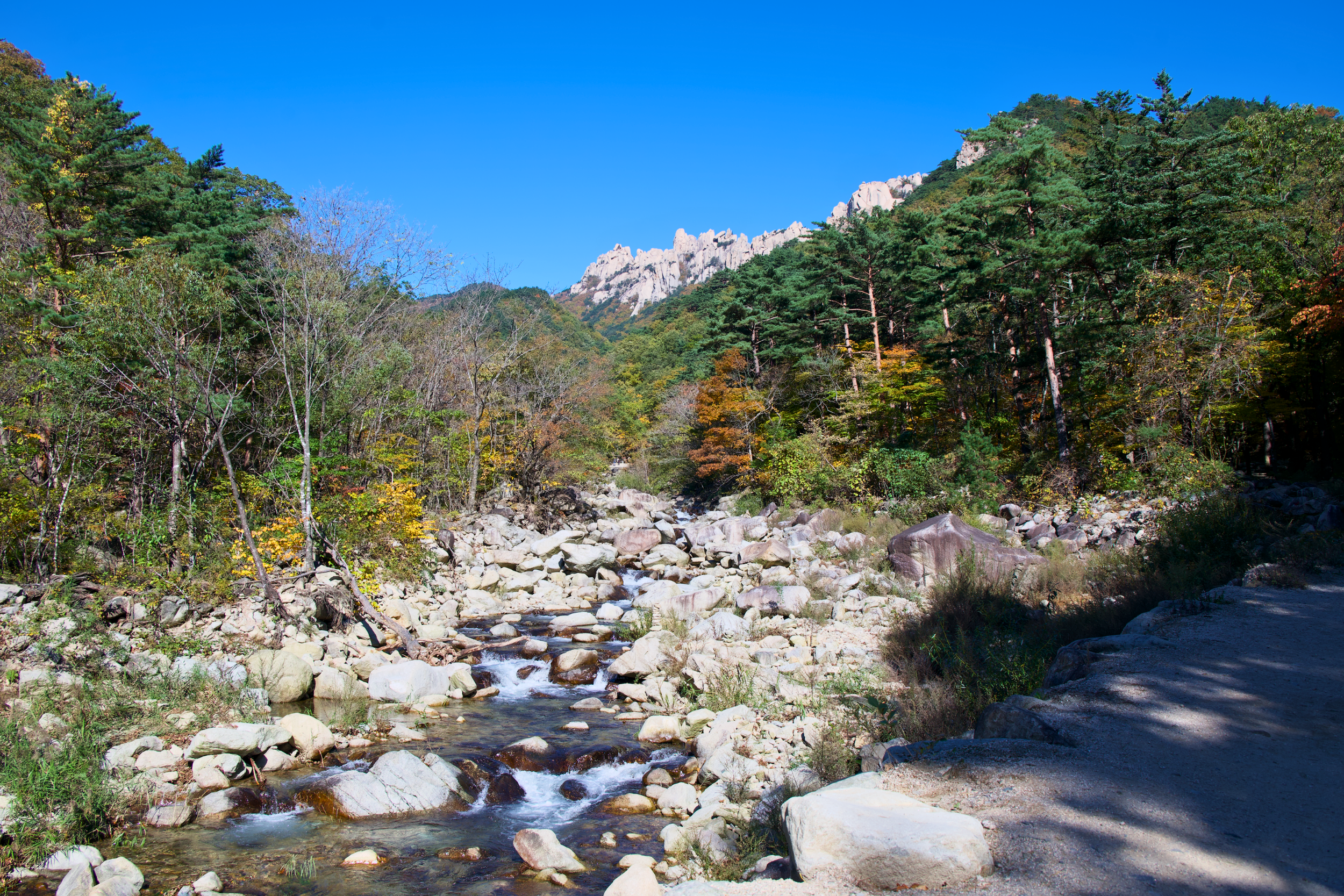
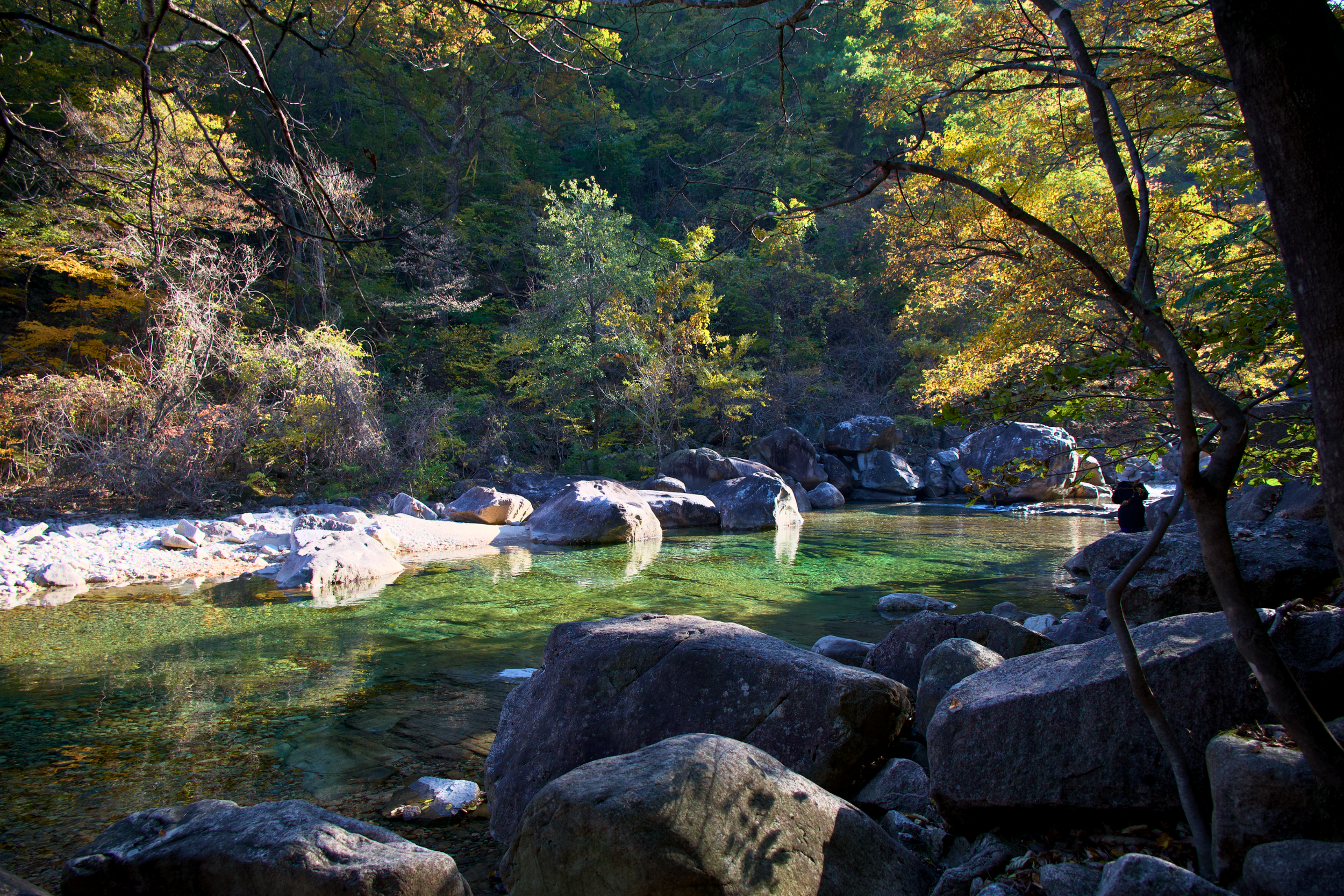
If you want something peaceful and low‑effort, Biseondae is the perfect trail. It follows a river through a quiet valley, with wooden bridges, smooth boulders, and clear water. It’s one of the best places to see fall colors without doing a strenuous hike.
Why this trail works:
Flat and beginner‑friendly
Great for photos
Shaded and cool in summer
Easy to combine with other trails
Good add‑on: Continue past Biseondae toward Geumganggul Cave if you want a short challenge.
Towangseong Falls Observatory (Best Viewpoint Without a Summit)
Distance: ~4.5 miles round‑trip Time: 3–4 hours Difficulty: Moderate Trailhead: Sogongwon → Biryong Falls path
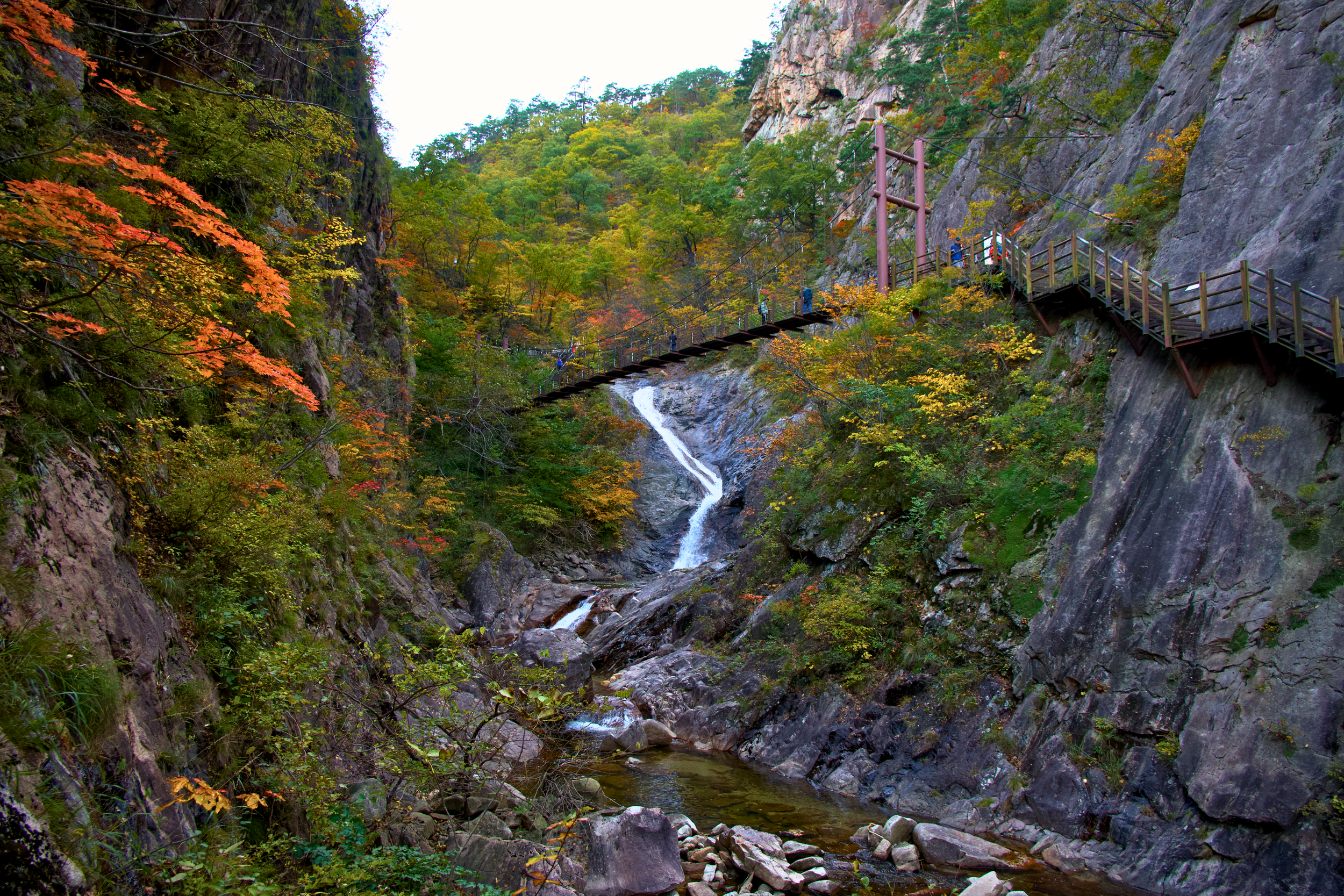
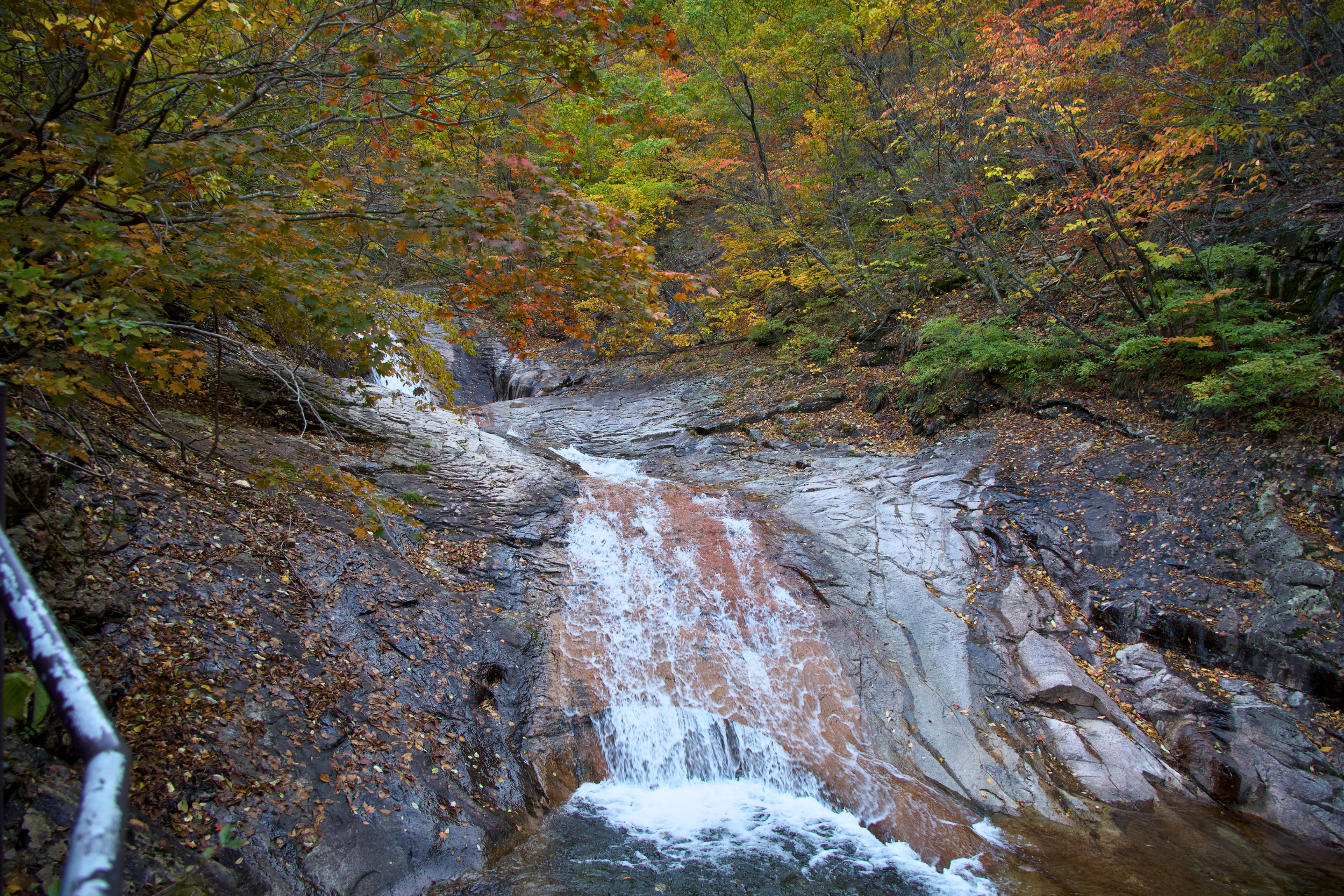
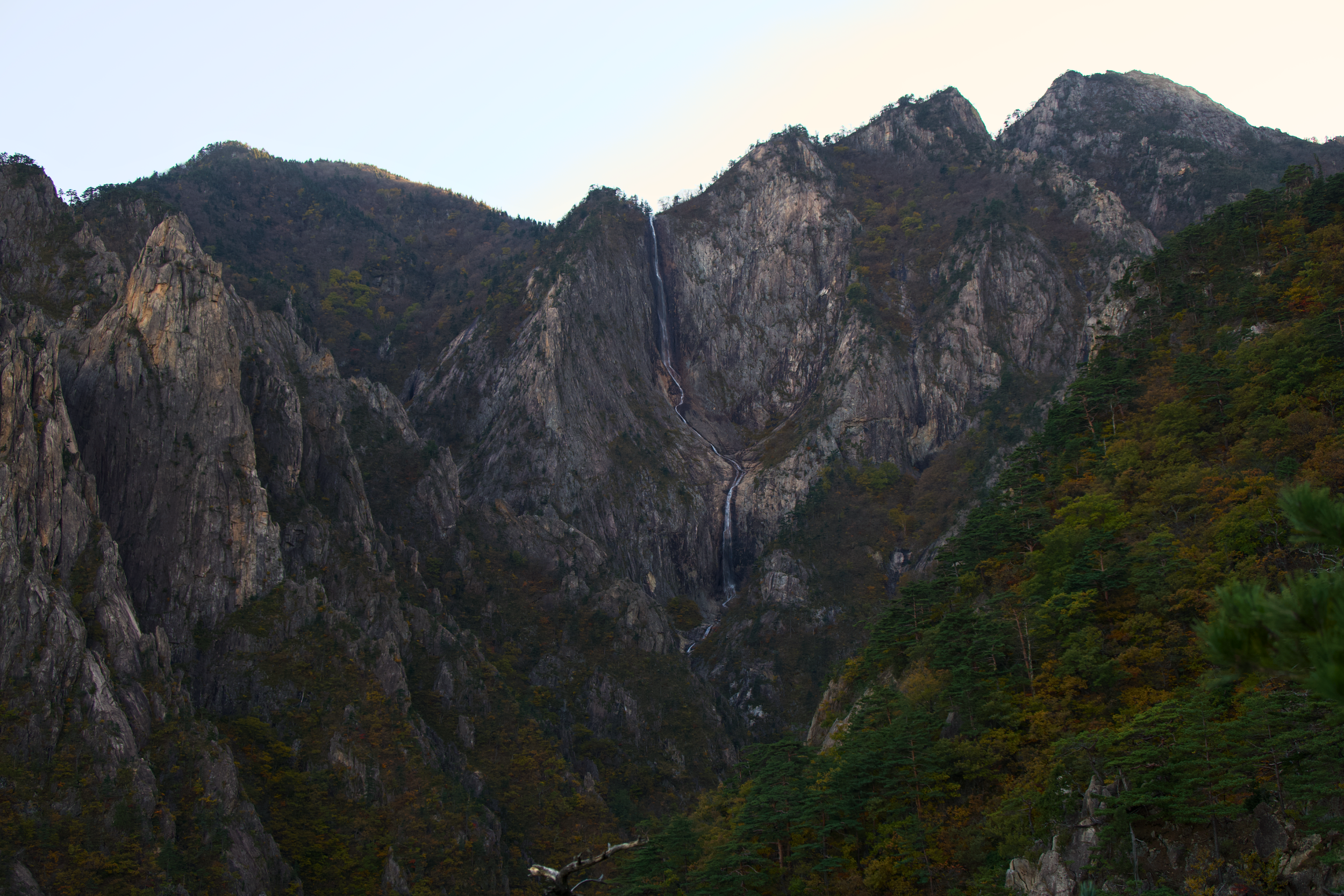
This trail takes you to a high observatory overlooking one of the tallest waterfalls in Korea. The climb is steady but not overwhelming, and the views from the top feel like something out of a movie: sharp granite peaks, deep valleys, and layers of mountains fading into the distance.
Why it’s worth it:
Big views without a summit hike
Less crowded than Ulsanbawi
Great in the fall and spring
A good “middle‑ground” trail
Tip: The observatory can be windy — bring a layer even in warmer months.
Biryong Falls (Short + Popular)
Distance: ~2.4 miles round‑trip Time: 1.5–2 hours Difficulty: Easy–Moderate Trailhead: Sogongwon
Biryong Falls is a quick, scenic hike that works for almost everyone. The trail follows a river and ends at a waterfall viewpoint. It’s a great warm‑up hike or something to add on after Biseondae.
Why people choose it:
Easy to fit into a half‑day
Good for families
Shaded and cool
Works in any season
Cable Car to Gwongeumseong Fortress (Best for Non‑Hikers)
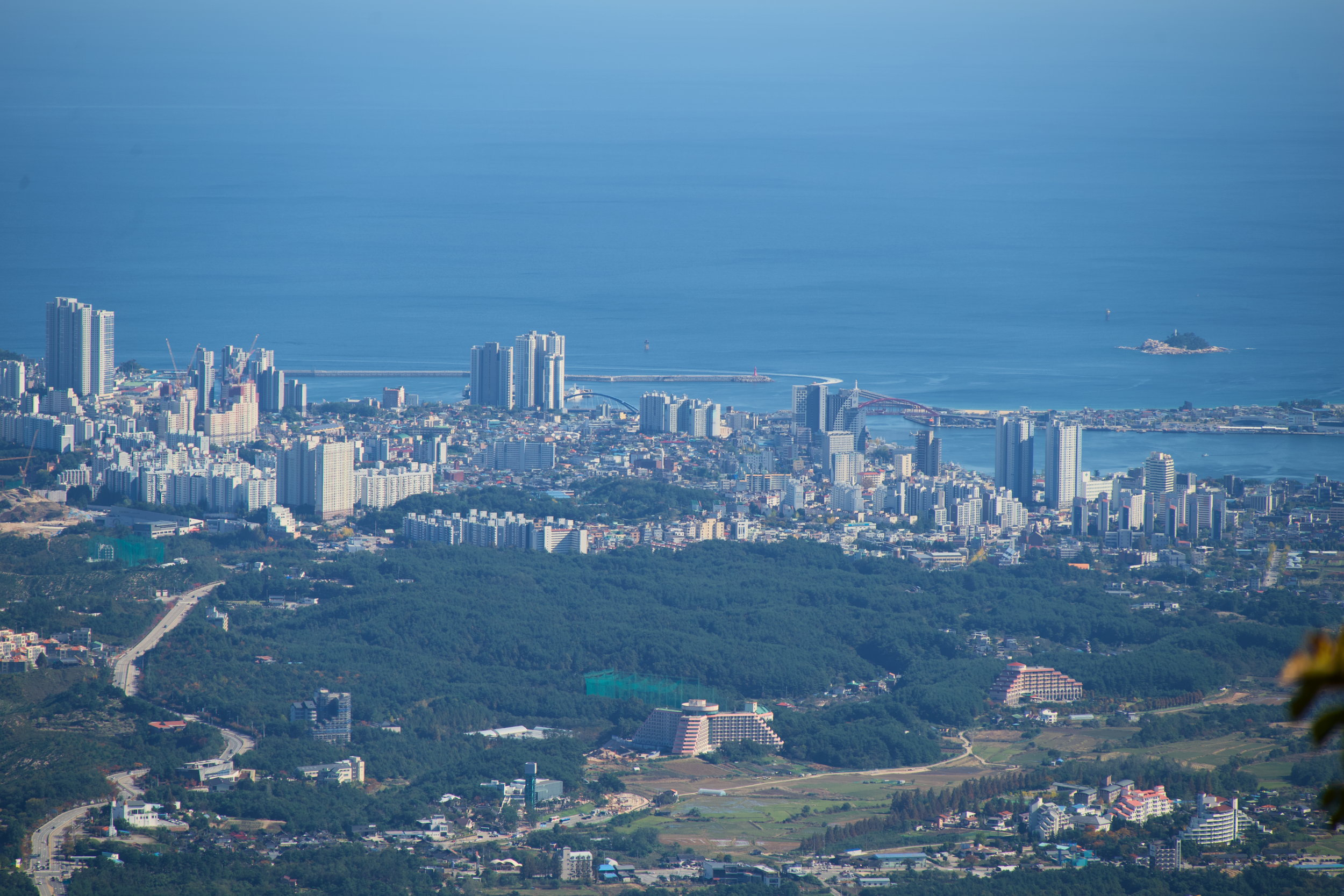
Duration: ~5–7 minutes each way Tickets: Buy at Sogongwon Views: Mountain ridges + Sokcho coastline
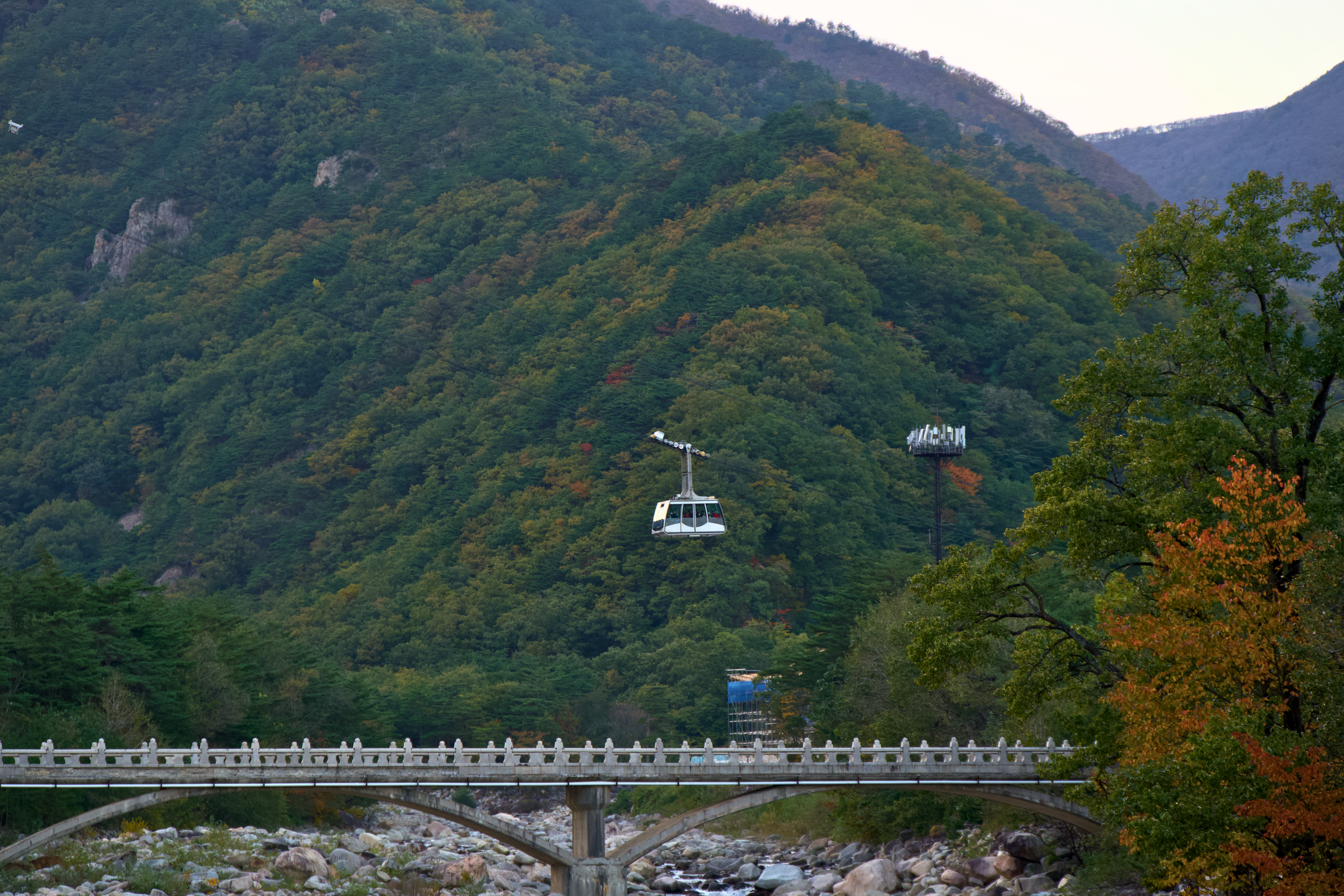
If you’re not hiking or you want a break between trails, the Seoraksan Cable Car is the easiest way to get a high viewpoint. The ride is short, and the views from the top are wide open.
Why it’s worth doing:
Great for sunrise or sunset
Accessible for all ages
Works well in shoulder seasons
A good option on tired‑leg days
Tip: Tickets can sell out in the fall, so go early.
Sinheungsa Temple (Must‑See Stop)
Time: 20–30 minutes Location: On the way to Ulsanbawi
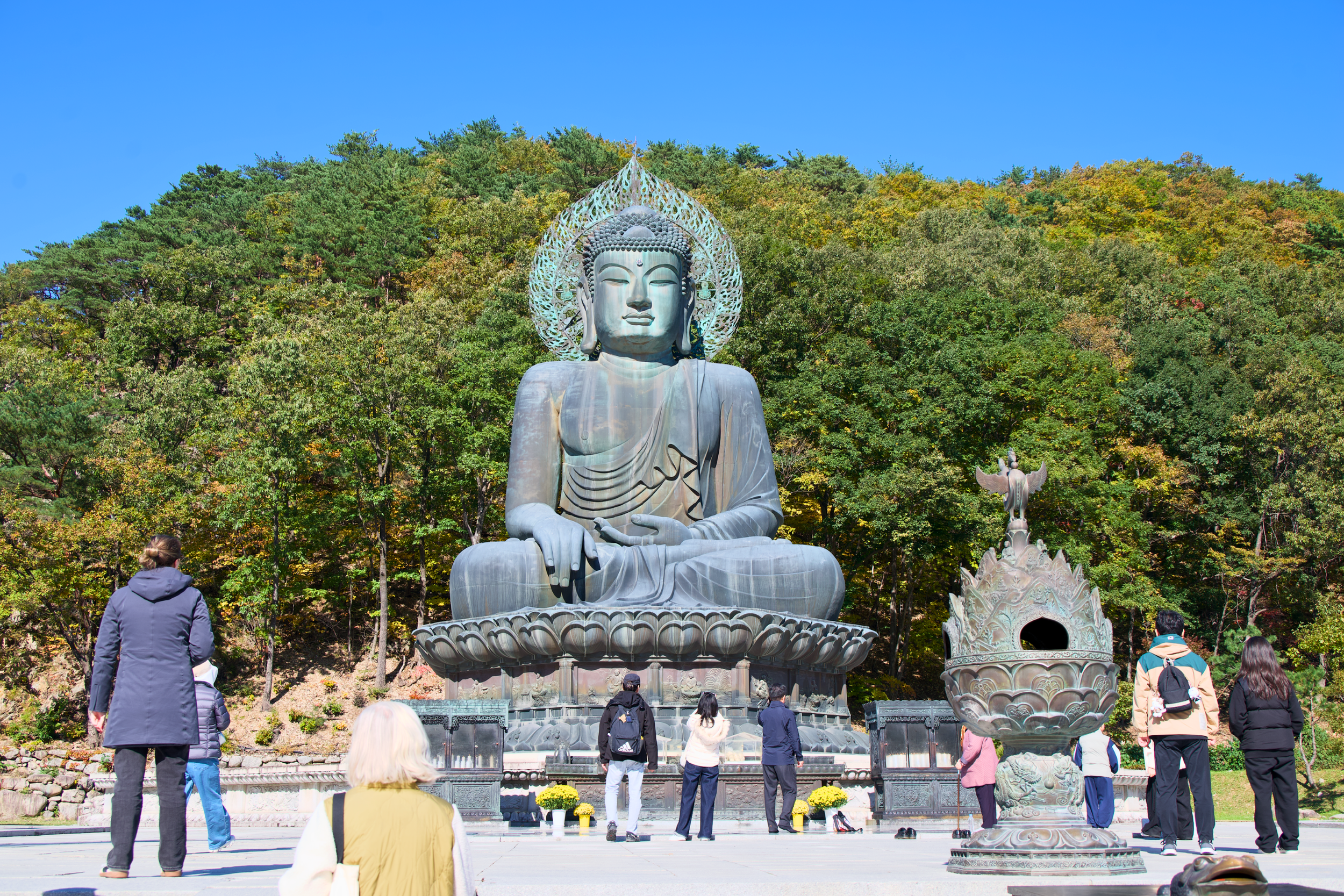
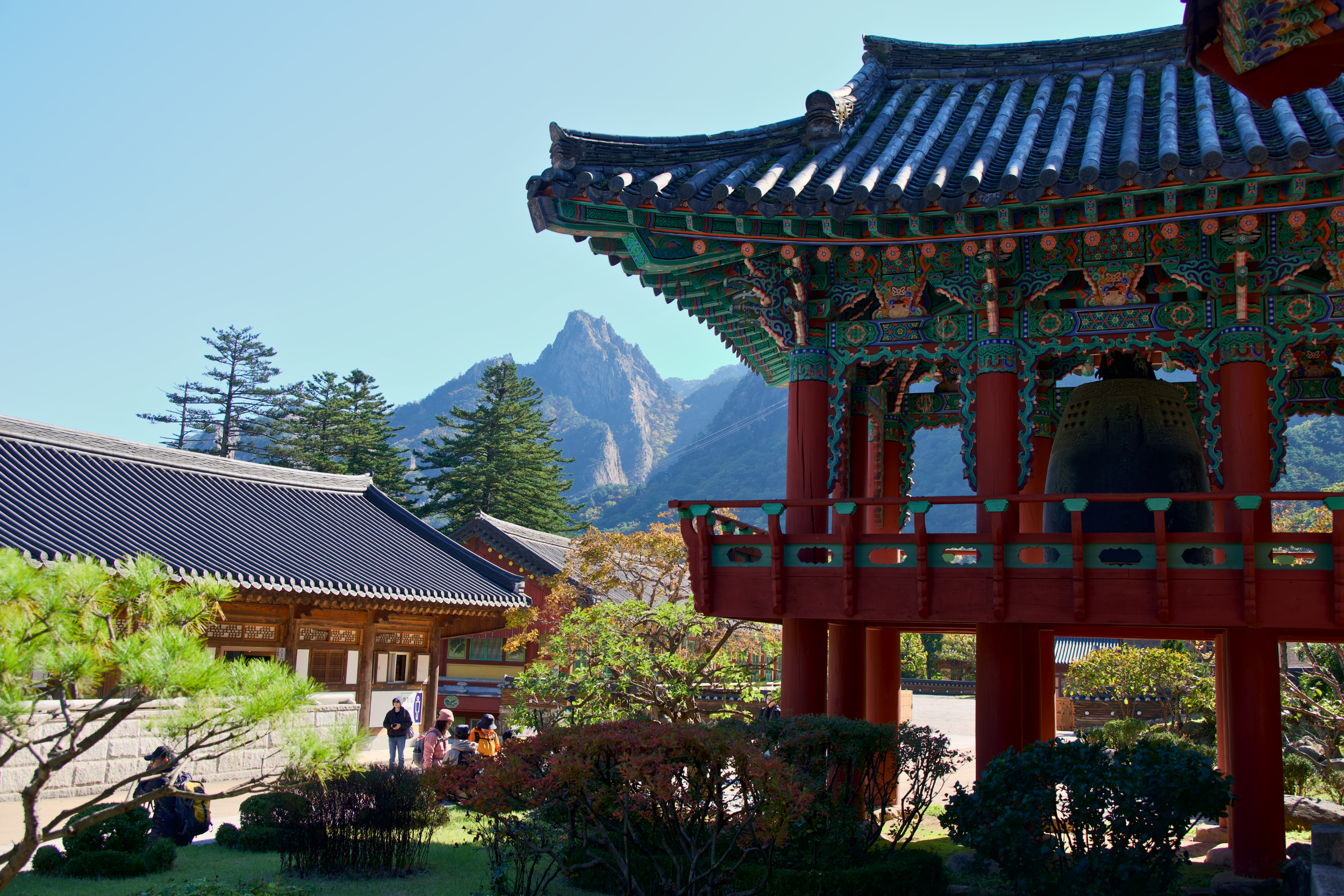
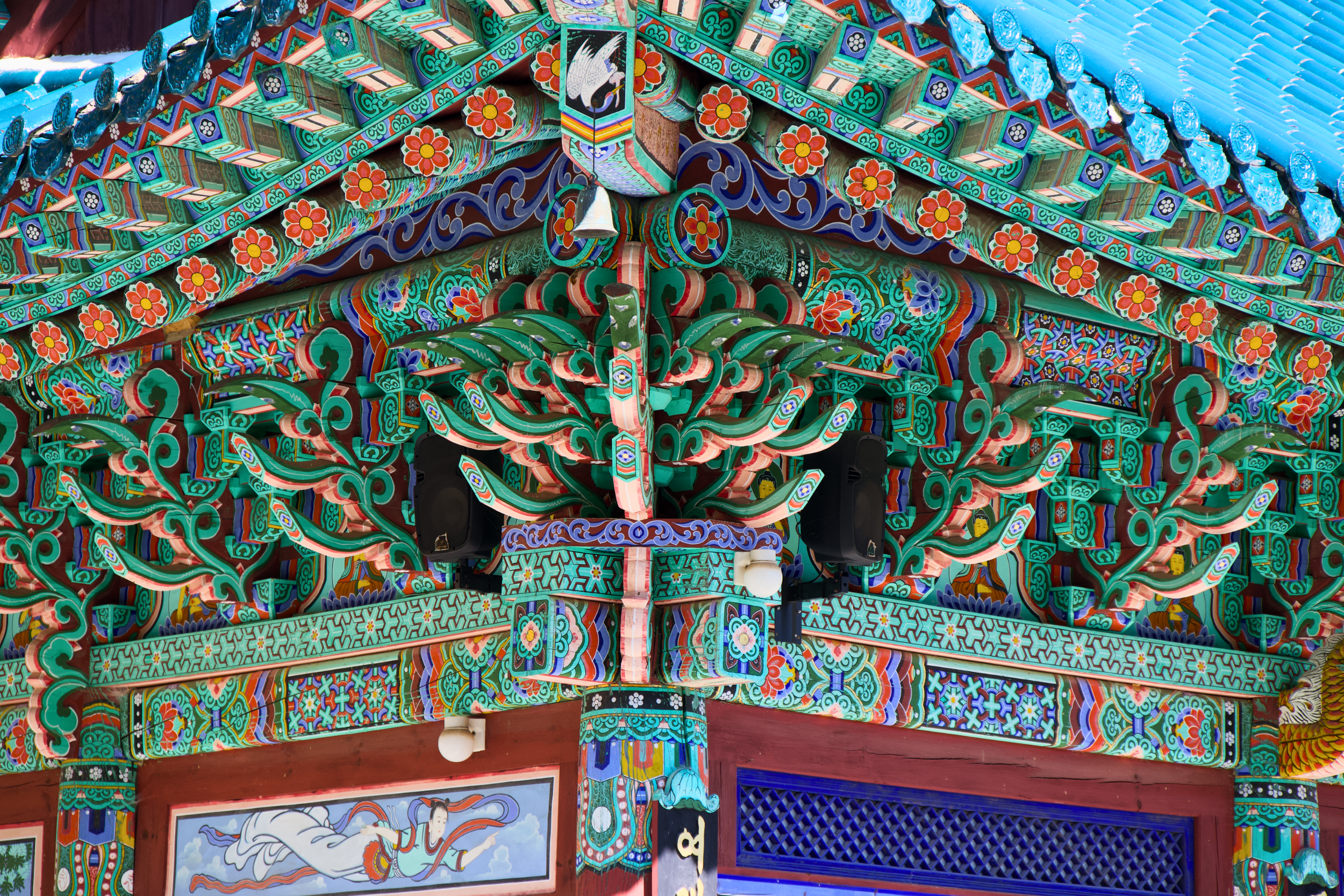
Sinheungsa is one of the oldest Zen temples in Korea, and you’ll pass it naturally on your way to Ulsanbawi. The giant bronze Buddha statue is the main landmark, but the temple grounds are peaceful and worth a short stop.
Why it’s worth visiting:
Easy to access
Beautiful in the fall
Great morning light
Adds cultural context to the park
Good to Know About Hiking in Seoraksan
Trails are well‑marked and easy to follow
Most routes start from the same entrance
Fall weekends are extremely busy
Spring and fall offer the best weather
Summer is humid but manageable
Winter trails may close due to ice
If you only have time for one hike, choose Ulsanbawi. If you want something easier, choose Biseondae. If you want a big view without a summit, choose Towangseong Falls Observatory.
Seasonal Guide (Seasons + Fall Folliage)
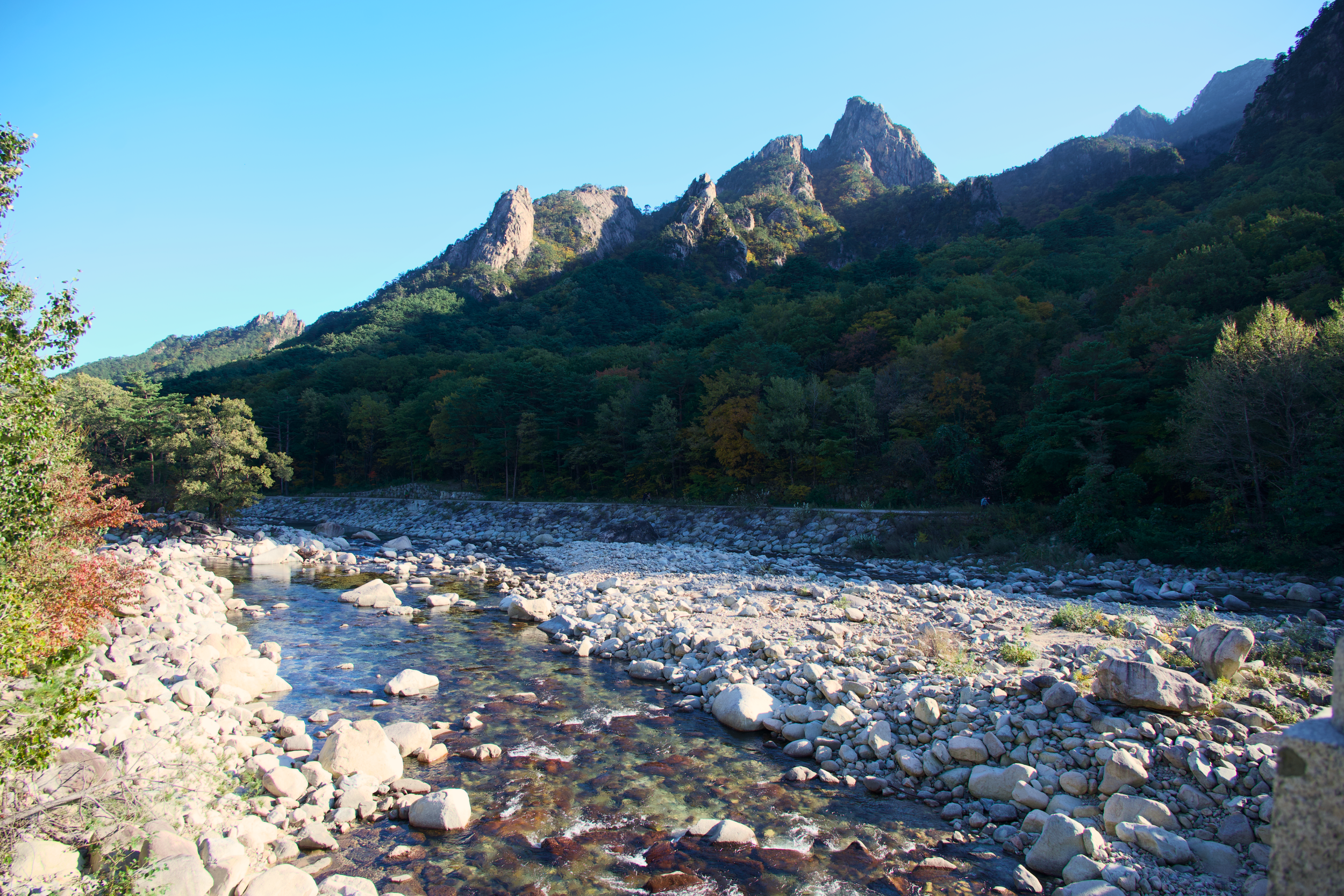
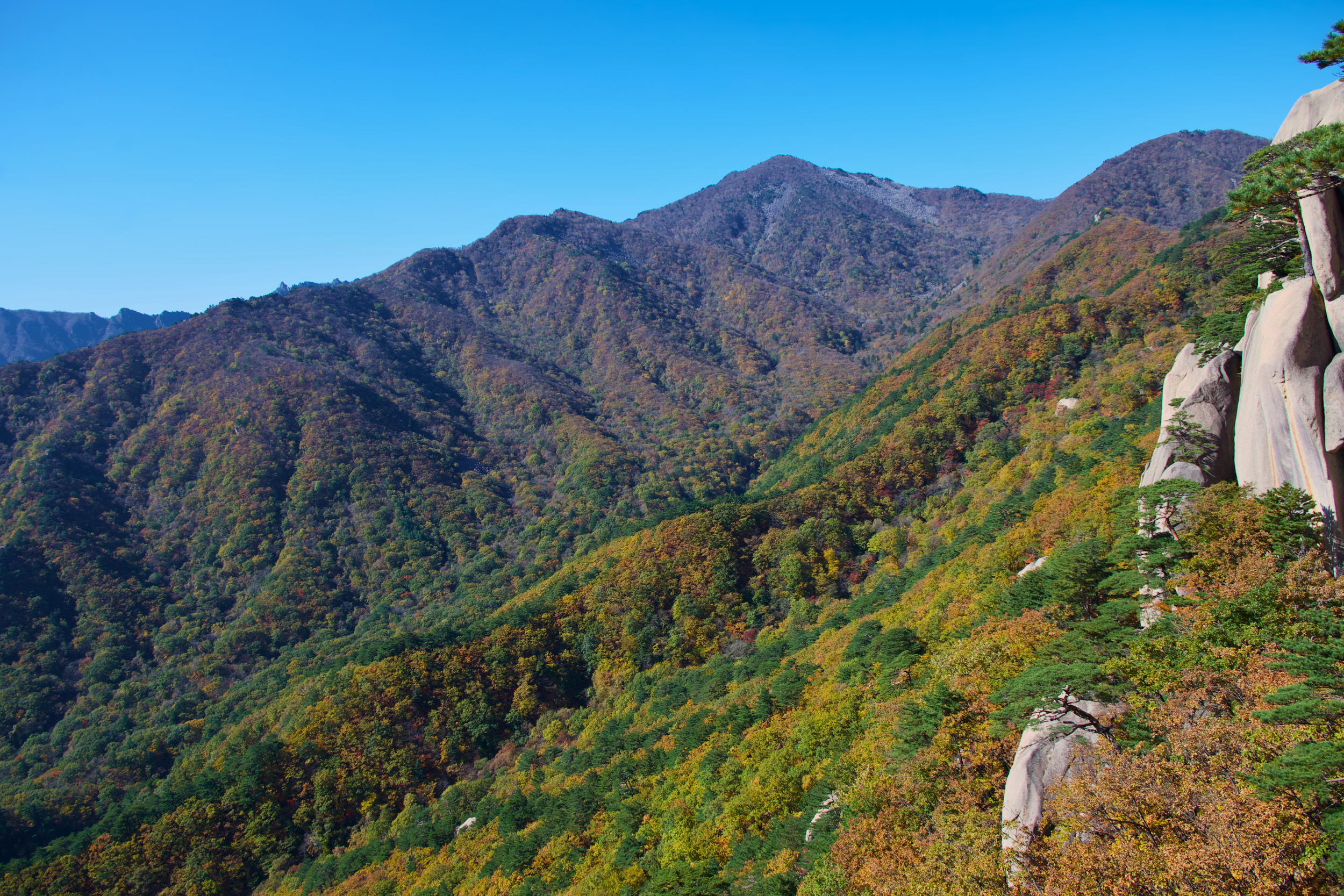
Seoraksan is beautiful year‑round, but the experience changes dramatically depending on the season. Weather, trail conditions, crowds, and foliage all shift month to month, so timing your visit makes a big difference.
Below is a practical breakdown of what each season actually feels like, plus the details travelers search for most: peak fall foliage timing, crowd patterns, and what to expect on the trails.
Spring (April–May)
Spring is one of the best times to visit Seoraksan. Temperatures are mild, the air is clear, and the park feels fresh after winter.
What to expect:
Cool mornings, warm afternoons
Cherry blossoms in early April
Green valleys + snow still on higher peaks
Fewer crowds than fall
Best trails in spring:
Biseondae
Towangseong Falls Observatory
Tip: Spring weather changes fast; bring a light layer.
Summer (June–August)
Summer is hot, humid, and lush. It’s not the most comfortable hiking season, but the shade along the river trails helps.
What to expect:
High humidity
Afternoon thunderstorms
Green, dense foliage
Busy weekends
Best trails in summer:
Biryong Falls
Biseondae
Tip: Start early to avoid heat and crowds.
Fall (September–November)
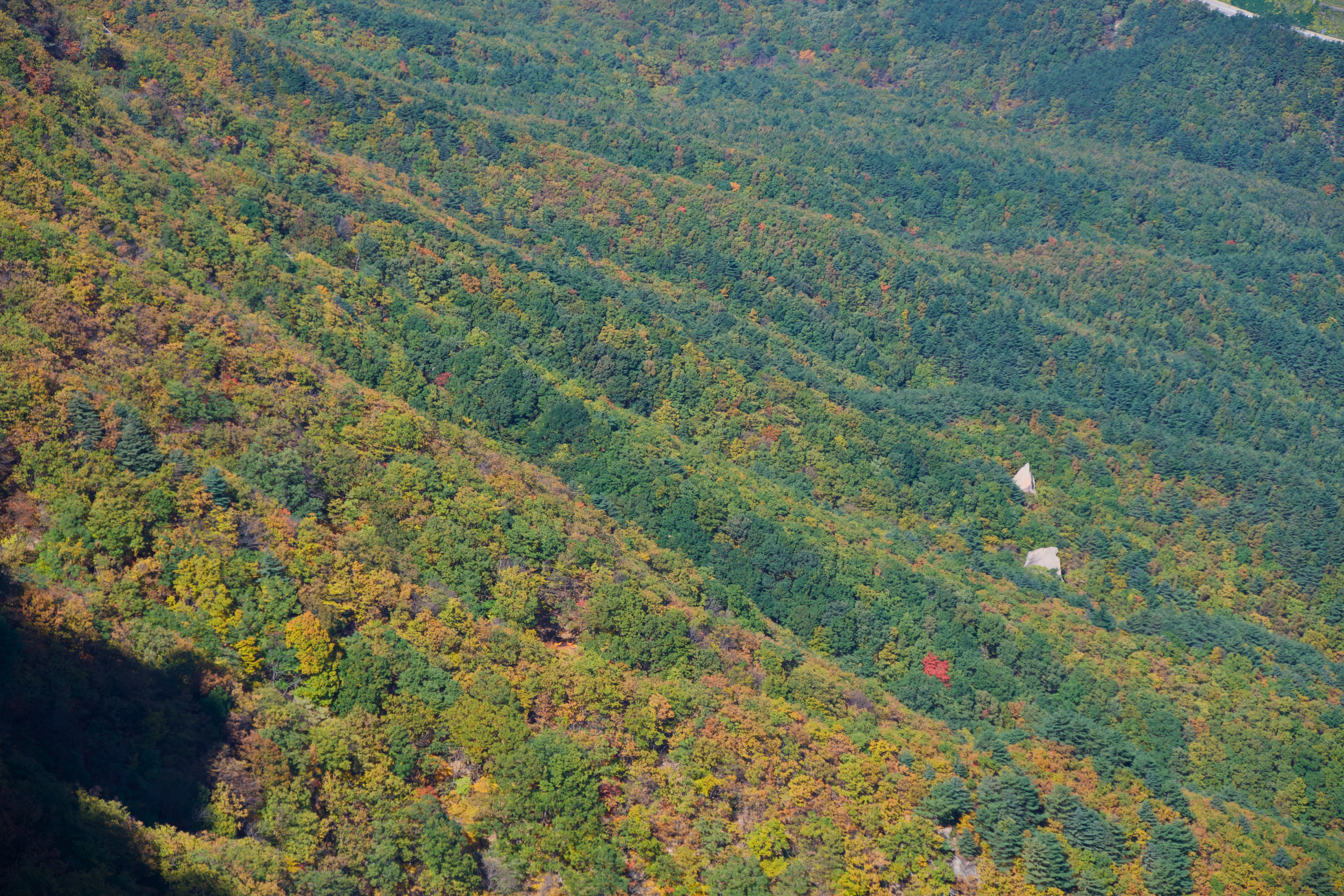
Fall is the peak season, and for good reason. The foliage is incredible, the weather is crisp, and the granite peaks look even sharper against the colors.
What to expect:
Cool, dry weather
Peak foliage mid‑October
Very busy weekends
Perfect hiking conditions
Best trails in fall:
Ulsanbawi
Towangseong Falls Observatory
Biseondae
Tip: If you’re visiting in October, arrive early; buses, parking, and trails fill quickly.
Winter (December–March)
Winter is quiet, cold, and beautiful in a completely different way. Some trails are closed due to ice, but the park still feels peaceful.
What to expect:
Freezing temperatures
Snow on peaks
Limited trail access
Very few crowds
Best trails in winter:
Biseondae
Sinheungsa Temple
Tip: Check trail closures before you go; conditions change daily.
Peak Fall Foliage Timing (What Most Travelers Want to Know)
Peak foliage in Seoraksan typically hits mid‑October, but it varies each year depending on temperature and rainfall.
General pattern:
Early color: October 8–12
Peak color: October 15–22
Late color: October 23–28
Best foliage trails:
Ulsanbawi
Biseondae
Towangseong Falls Observatory
Tip: Weekdays are dramatically less crowded than weekends during peak foliage.
Best Time of Day to Visit
Morning is always best, especially in the fall.
Why mornings work:
Cooler temperatures
Softer light for photos
Fewer crowds
Better chance of cable car tickets
If you’re hiking Ulsanbawi, aim to start before 8:30 AM.
Quick Summary: Best Time to Visit Seoraksan
Best overall: Mid‑October (peak fall)
Best weather: Late September–early November
Least crowded: Winter + early spring
Best for beginners: Spring + early fall
Best for photography: Fall foliage season
Dry bags and waterproof phone cases from REI are essential for keeping valuables dry on a rainy day
Itineraries for Seoraksan National Park
Seoraksan works for every type of traveler, day‑trippers, weekend hikers, slow travelers, and people who just want to see the foliage without committing to a long hike. These itineraries cover the most common ways people structure their time in the park.
1‑Day Seoraksan Itinerary (Most Popular)
If you only have one day, focus on one major hike and one scenic add‑on.
Morning:
Arrive early at Sogongwon
Hike Ulsanbawi (3–4 hours)
Afternoon:
Visit Sinheungsa Temple
Take the Seoraksan Cable Car if tickets are available
Evening:
Bus back to Sokcho
Dinner near the terminal or beach
Good for: Travelers who want the “classic” Seoraksan experience.
2‑Day Seoraksan Itinerary (Best Balance)
Day 1:
Ulsanbawi
Temple + cable car
Sunset at Sokcho Beach
Day 2:
Biseondae in the morning
Continue to Towangseong Falls Observatory if you want a longer hike
Lunch in Sokcho
Explore Yeongrangho Lake
Good for: Travelers who want a mix of hiking + scenery.
3‑Day Seoraksan Itinerary (Slow + Scenic)
Day 1:
Biryong Falls
Cable car
Sokcho seafood market
Day 2:
Ulsanbawi early
Temple + coffee in Sogongwon
Relax at the beach
Day 3:
Biseondae
Optional: Geumganggul Cave
Explore Sokcho’s cafés + lake area
Good for: Travelers who want a slower pace or are visiting during peak foliage.
What to Pack for Seoraksan National Park: The Complete Packing List
Getting this right makes a genuine difference, particularly for the hiking portions of the trip.
Footwear
Footwear is the single most important packing decision for this trip.
Canyon trails: Hiking boots with ankle support and aggressive tread are non-negotiable. (Men’s& Women’s hiking boots)
Moderate trails: Lightweight trail runners work well. (Men’s & Women’s hiking shoes)
Post-hike options: A casual pair of shoes or sandals. (The cutest pair on REI!)
Clothing
Moisture-wicking base layers (My recommendations: women's & men’s tops)
Packable midlayer - fall temperatures swing significantly between morning and afternoon (My recommendations: women’s & men’s jackets)
Rain jacket - conditions change fast after rain, and trails close (women’s & men’s rain jackets)
Convertible hiking pants - recommended for days when it starts out cold and warms up in the afternoon (My recommendations: women’s & men’s pants)
Sun hat and sunglasses - exposed sections of the trail have direct sun: Sunglasses
Trail Essentials
Trekking poles - genuinely useful on some hikes
Small daypack - for water, snacks, layers, and camera gear
Headlamp - if you're hiking early or staying out near dusk
Trail snacks - (some of my favs: salty snack mix, sweet & salty snack mix, & snack bar)
Kayaking Essentials
Dry bags and waterproof phone cases - to protect valuables on the water
Quick-dry clothing - you may get wet
Sun protection - water reflects UV strongly
Photography
This national park is exceptionally photogenic.
Wide-angle lens or phone clip-on lens - helps capture the park at scale
Waterproof phone case - essential for rainy days (or your GoPro for the most epic photos)
Extra battery or portable charger - you will take more photos than expected
Tech and Navigation
Download offline maps before you go, just in case
AllTrails Pro for offline trail maps
Cash - useful at smaller: stands and local spots
Safety Tips for Seoraksan
Seoraksan is well‑maintained and beginner‑friendly, but conditions change quickly.
Good to know:
Trails can be slippery after rain
Stairs on Ulsanbawi get crowded
Weather shifts fast in fall + spring
Some winter trails close due to ice
Stay on marked paths — fines apply
If you’re hiking solo, stick to the main trails. They’re busy, safe, and easy to follow.The Perfect Two-Day Weekend
Common Mistakes to Avoid
A few things first‑timers often get wrong:
Starting Ulsanbawi too late
Underestimating the stairs
Not checking cable car availability
Visiting on a fall weekend without a plan
Forgetting layers — the observatory gets windy
Assuming the park is walkable from Sokcho (it’s not)
Avoid these and your day will go much smoother.
What to Know About Sokcho (Your Base for Seoraksan)
Sokcho is the coastal city that makes visiting Seoraksan so easy. It’s compact, walkable, and built around a mix of beaches, lakes, seafood markets, and bus routes, all of which matter when you’re planning your days in the park. Most travelers only think of Sokcho as a place to sleep, but it’s worth understanding the layout because it shapes your mornings, your meals, and how quickly you can get into the park.
What Sokcho Feels Like
Sokcho is calm, coastal, and very local. It’s not a flashy resort town; it’s a lived‑in city with fishermen, families, students, and hikers all moving through the same spaces. The pace is slower than Seoul, the air is fresher, and the mountains feel close even when you’re standing on the beach.
Good to know:
It’s extremely safe
It’s easy to navigate even without Korean
It’s quiet at night (except peak fall weekends)
It’s built around buses, not subways
If you like simple, functional base cities with good food and easy transit, Sokcho is perfect.
How to Get Around Sokcho
Sokcho is small enough that you’ll use a mix of walking and buses.
Local buses:
Reliable
FrequentThe
T‑money card works everywhere
Bus 7 + 7‑1 takes you directly to Seoraksan
Walking:
Terminal → beach: ~20–25 minutes
Beach → lake: ~15 minutes
Terminal → seafood market: ~10 minutes
Taxis:
Easy to find
Affordable
Good for early mornings or late nights
Tip: Save the bus stop name “Seoraksan Sogongwon” in your phone, it’s the one you’ll use every day.
Where to Eat in Sokcho
Sokcho has great food, especially if you like seafood or Korean comfort dishes. You don’t need a long list; you just need the right categories.
Seafood Market (Sokcho Jungang Market):
Fresh sashimi
Grilled fish
Squid + octopus dishes
Street snacks
Beach Area:
Cafés with ocean views
Brunch spots
Coffee before your hike
Near the Terminal:
Korean comfort food
Noodles
Convenience stores for snacks
Affordable restaurants
Local specialties:
Naengmyeon (cold noodles)
Fresh seafood
Squid dishes
Sweet potato snacks
Tip: If you’re hiking early, grab snacks the night before — many cafés open later in the morning.
What to Do in Sokcho (Besides Seoraksan)
If you have extra time, Sokcho has a few easy add‑ons that fit naturally into a hiking trip.
Sokcho Beach:
Sunrise views
Wide, clean, quiet
Great for a post‑hike walk
Yeongrangho Lake:
Peaceful walking paths
Cafés around the lake
Good for slow mornings
Lighthouse Observatory:
Coastal views
Easy walk
Great for photos
Abai Village:
Small, historic neighborhood
Known for seafood + local dishes
Short ferry ride
These are simple, low‑effort activities that pair well with hiking days.
Neighborhood Breakdown (Quick + Useful)
Near the Express Bus Terminal:
Most convenient for Seoraksan
Affordable hotels
Fastest access to Bus 7/7‑1
Good for early hikers
Sokcho Beach:
Scenic
Great cafés
Relaxing evenings
Slightly farther from the terminal
Yeongrangho Lake:
Quiet
Local
Peaceful walks
Good for couples or slower itineraries
Tip: If you’re visiting in the fall, book early; Koreans travel hard during foliage season.
Good to Know About Sokcho
Convenience stores are everywhere
ATMs are easy to find
Buses run frequently
It’s extremely safe for solo travelers
Fall weekends are very busy
Winter is quiet and peaceful
Sokcho is simple, functional, and easy, exactly what you want in a base city for a national park trip.
Ready to Book Your Seoraksan National Park Trip?
Save this guide, start with the full weekend, and let this part of South Korea surprise you. Trust me, it will.
Questions about Seoraksan? Send me a message on my social channels. I read everything and genuinely enjoy talking about this part of South Korea. If you've been to this part of the South Korea, tell me what I missed. There's always more.
Frequently Asked Questions About Visiting Seoraksan National Park
-
Yes, it’s one of Korea’s most iconic national parks, and the scenery is incredible year‑round.
-
1–2 days is perfect for most travelers. Add a third day for any additional hikes you didn’t get to, or add beach time back in Sokcho.
-
It’s challenging but doable. The stairs are the hardest part.
-
Absolutely. Biseondae and Biryong Falls are great beginner trails.
-
Yes, especially mid‑October. Go early.
-
Yes, especially if you’re not hiking or want an easy viewpoint.
The Scenic Route Traveler inspires intentional travel through storytelling, hidden gems, and culturally rich experiences around the world.
-
I’m Erin, the voice behind Scenic Route Traveler, sharing intentional travel stories and guides from around the globe.
-
We deliver travel guides and storytelling through YouTube, social media, photography, and digital products designed for fellow travelers.
-
If you’re new here: this is a space for travelers who care more about how a place feels than how it looks on a checklist. You’ll find guides, stories, and resources designed to help you slow down and travel with intention.