
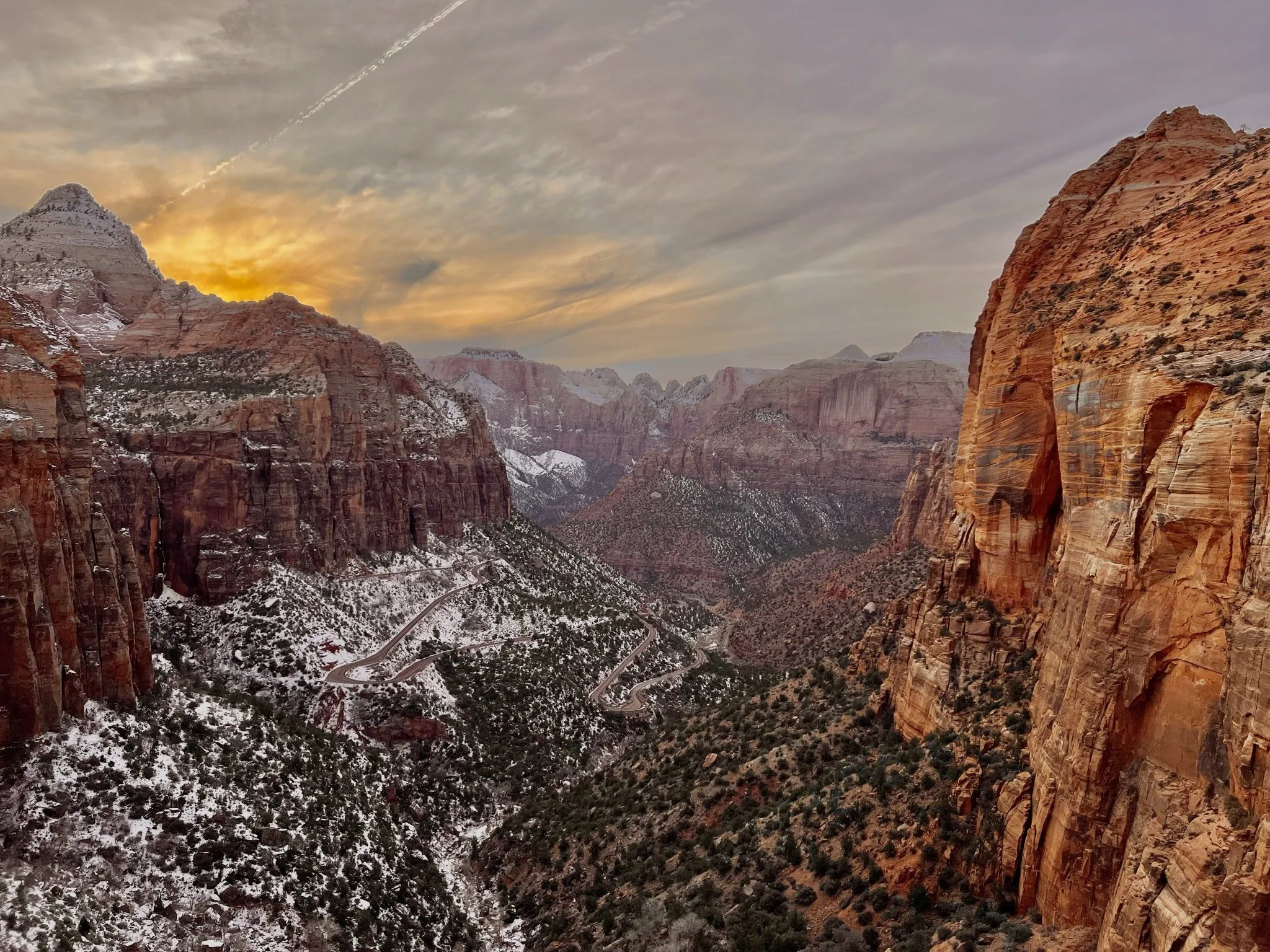
First Timer's Zion Guide: Hidden Gems & Tips
Discover Zion's hidden gems and shoulder season magic. A thoughtful first-timer's guide to experiencing this iconic park beyond Angels Landing + the crowds.
Table of Contents
Why Visit Zion During Shoulder Season (Your Secret Weapon)
Let me be blunt: visiting Zion in peak summer is like trying to find peace at a shopping mall on Black Friday. The park sees nearly 5 million visitors annually, with the vast majority crammed into June through August.
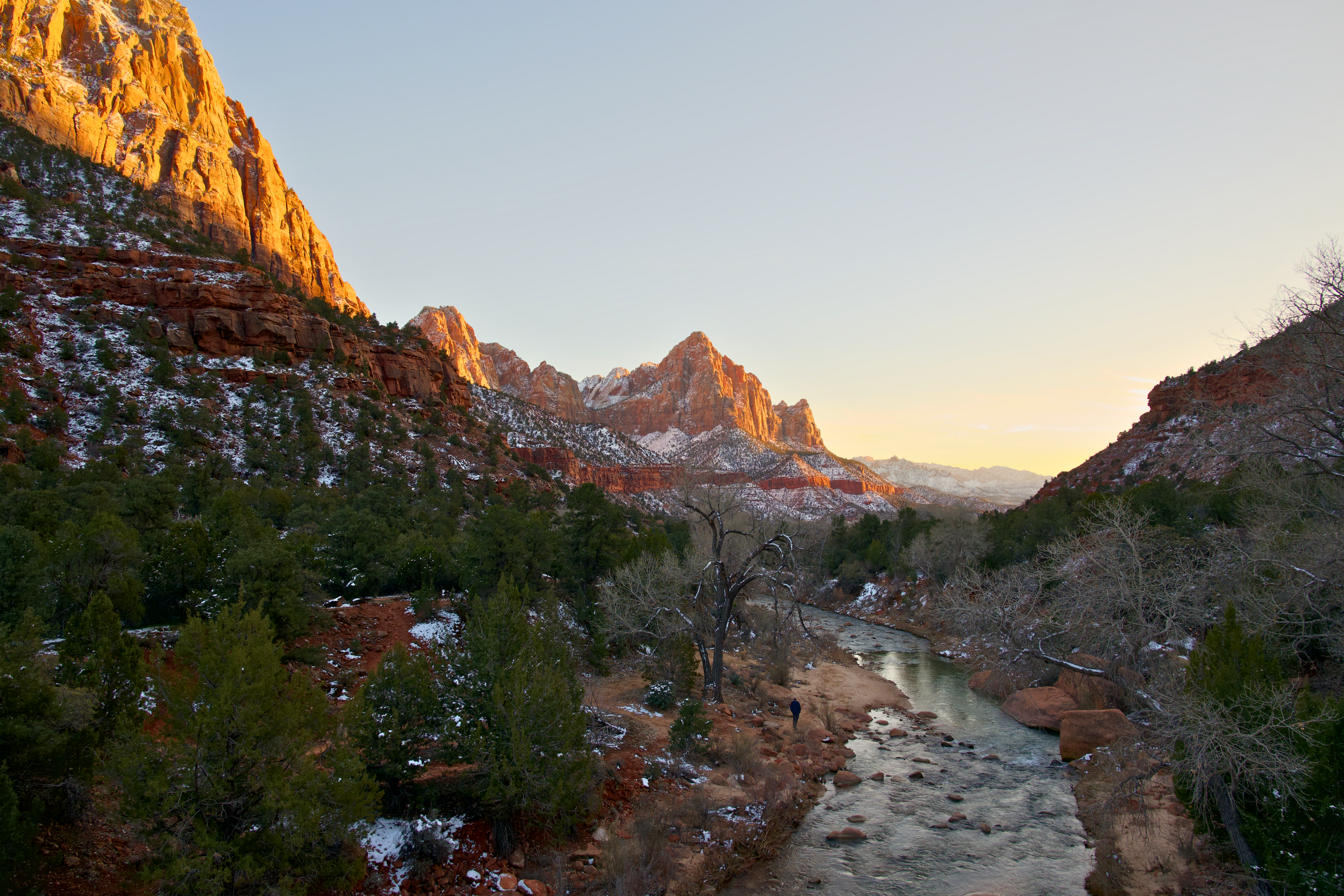
The secret? Visit during shoulder season (March-May or September-November), and you'll experience a completely different park.
Spring (March-May): Waterfalls & Wildflowers
Spring in Zion is pure magic. The Virgin River runs high from snowmelt, creating temporary waterfalls that disappear by summer. Wildflowers carpet the trails, and temperatures sit comfortably in the 60s-70s.
Pros:
Flowing waterfalls everywhere (especially late March through April)
Emerald Pools actually have emerald water
Moderate hiking temperatures
40% fewer visitors than in the summer
Wildflowers bloom throughout the canyon
Cons:
Some higher elevation trails may still have snow/ice
Water in the Narrows is colder (50-60°F)
Occasional spring rainstorms (but they create stunning light)
What to pack: Bring layers, mornings can be chilly (40s), afternoons warm up nicely. A lightweight rain jacket is essential for those unpredictable spring showers.
Bring hiking boots (men’s & women’s hiking boots), lightweight rain jacket (women’s & men’s jackets), packable down jacket for layers (women's & men’s tops)
Fall (September-November): Golden Light & Solitude
Fall is my personal favorite time to visit. The cottonwood trees turn brilliant gold, creating stunning contrasts against the red rock. September offers warm days with cool mornings, while October and November bring crisp air perfect for hiking.
The breakdown:
September: Still warm (70s-80s), fewer crowds than summer, perfect hiking weather
October: Peak fall colors, comfortable temps (60s-70s), my top recommendation
November: Quieter still, cooler (50s-60s), occasional early snow at higher elevations
Photography tip: The low autumn sun creates incredible golden-hour light that lasts much longer than in summer. Bring your camera for those glowing canyon walls.
Winter Visits: The Quiet Side of Zion
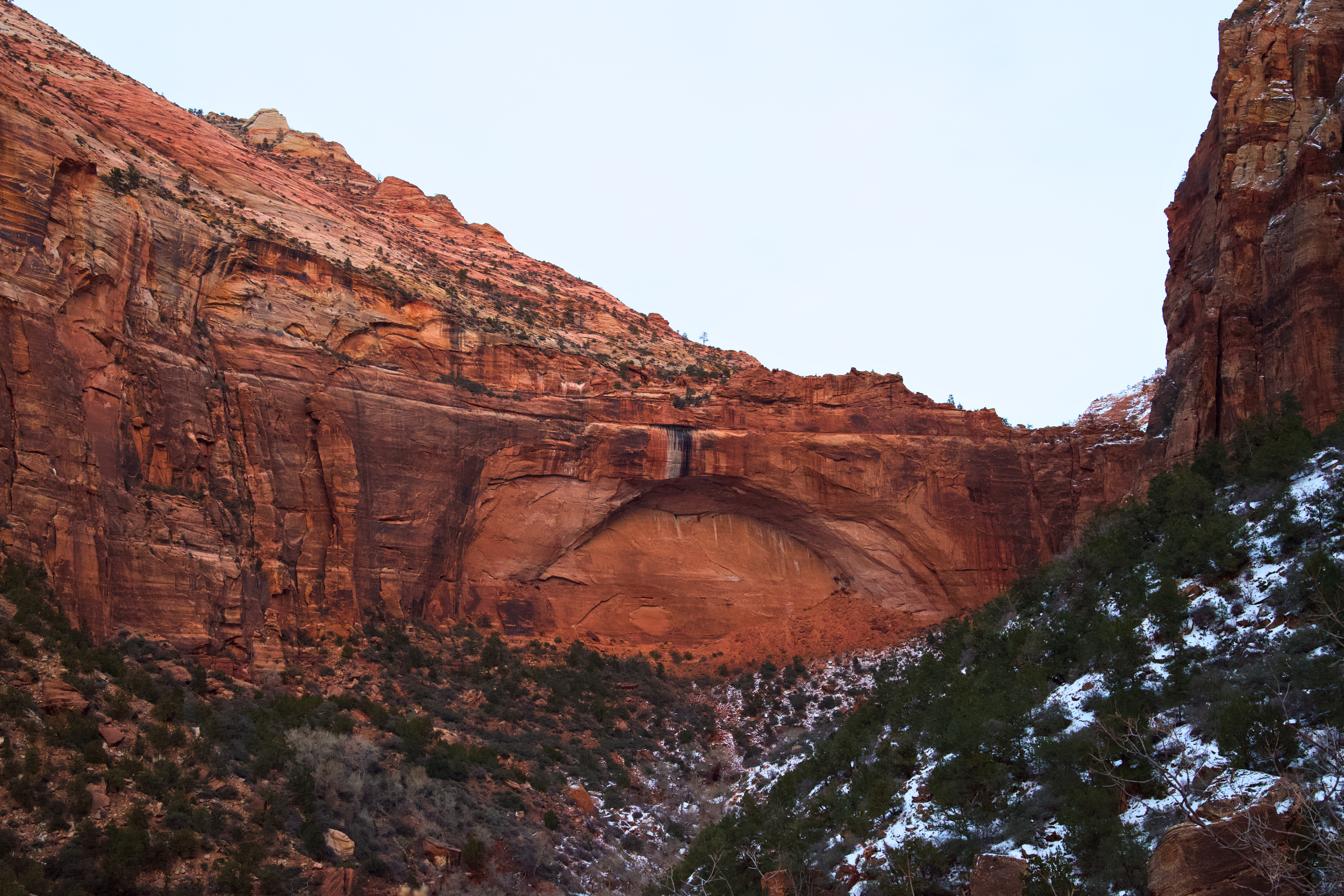
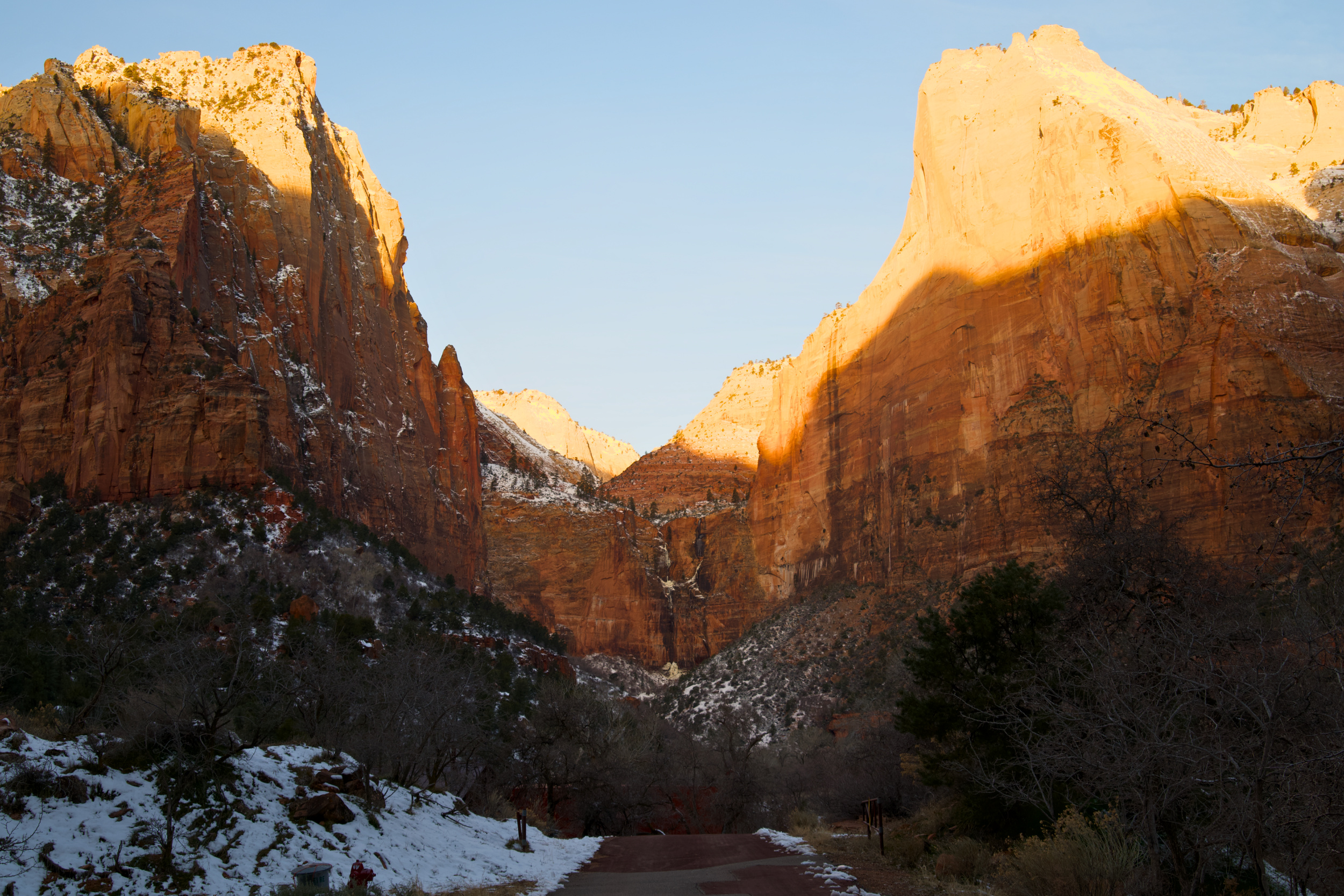
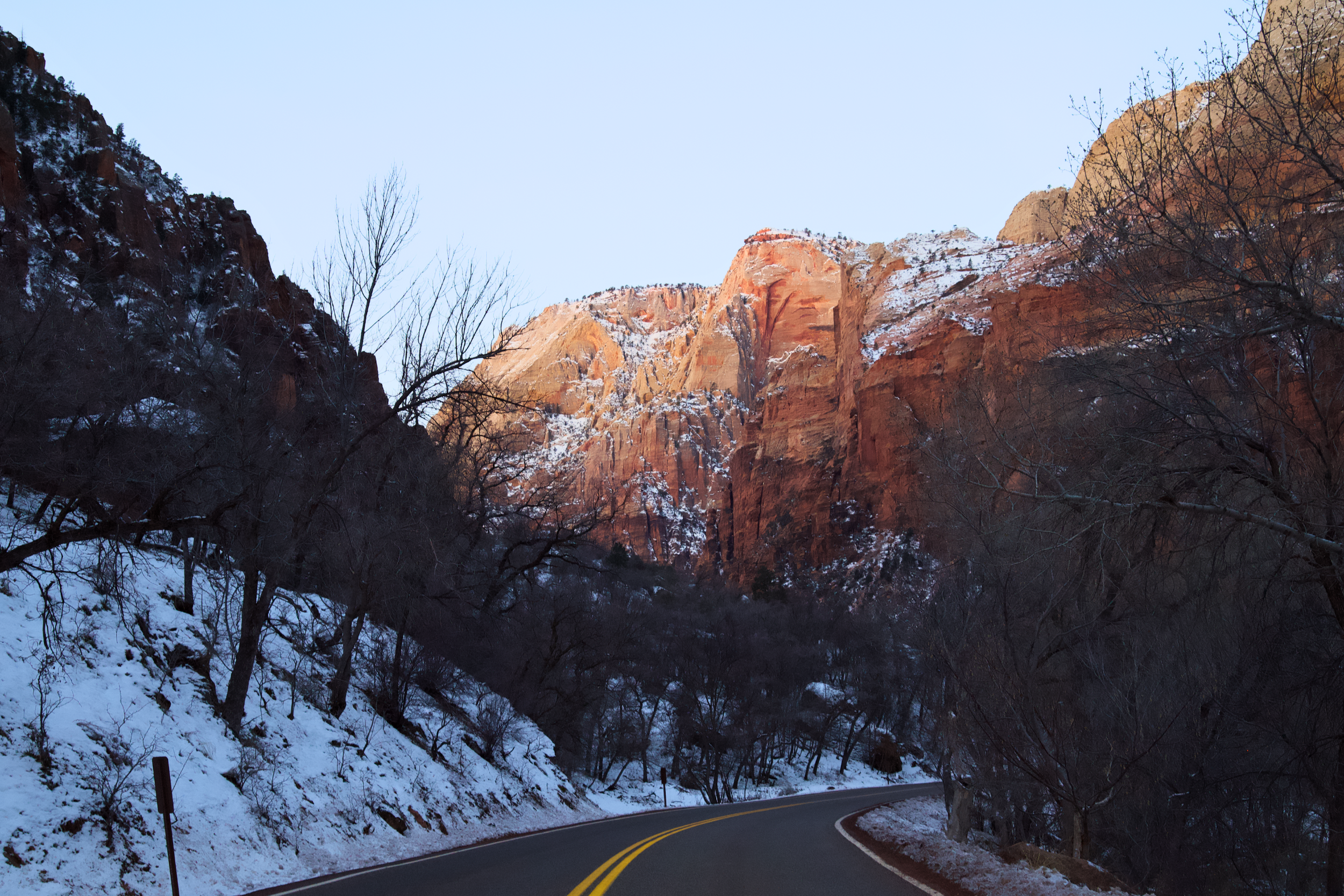
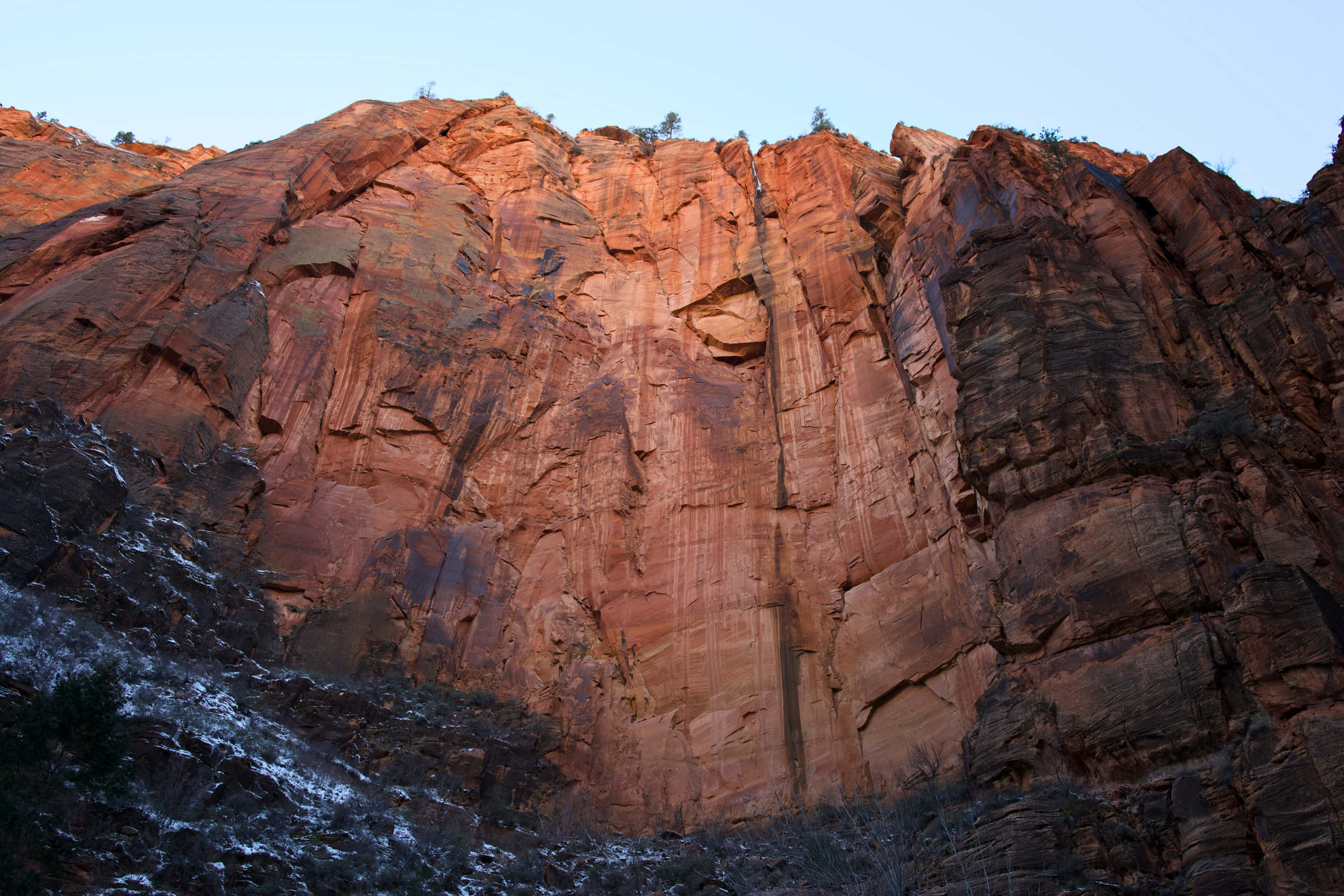
Don't dismiss winter Zion. Yes, it's cold (30s-50s), but the park becomes incredibly peaceful. You'll often have entire trails to yourself, and snow-dusted red rocks create surreal landscapes.
What's open: Most main canyon trails remain accessible. The Narrows closes if water levels are too high, and Angels Landing can be icy (micro-spikes required).
Winter magic: The shuttle doesn't run December-February, meaning you can drive your own car through the canyon—stopping whenever you want for photos without waiting for the next shuttle.
Bring micro-spikes, insulated hiking boots, hand warmers, and winter hiking gear
First-Timer Essentials: What You Really Need to Know
Understanding the Shuttle System (And How to Beat It)
When it runs: Early March through late November (exact dates vary by year)
Operating hours:
First shuttle: 6:00 AM
Last shuttle: After dark (times vary seasonally)
Shuttles run every 7-10 minutes
The strategy:
Arrive at the Visitor Center before 7 AM to avoid long waits (yes, I know that's early)
Alternatively, catch the shuttle after 4 PM when crowds thin out
The Town of Springdale also runs a free shuttle that connects with the park shuttle. Use this to avoid parking hassles
Game-changer tip: In December through February, the shuttle doesn't run at all. You can drive your own car through the canyon and park at the trailheads. This is incredibly underrated for photography and flexibility.
The Permit Puzzle Decoded
When you DON'T need permits:
Most day hikes (Emerald Pools, Riverside Walk, Watchman Trail, etc.)
Hiking up the Narrows from the bottom
Any Kolob Canyon trails
East Zion trails
When you DO need permits:
Angels Landing:
Seasonal lottery system (application opens months in advance)
Also offers a day-before lottery
Required for the final 0.5-mile section with chains
My honest take: It's stunning, but the permit hassle and crowds make the alternatives (like Observation Point) equally rewarding
The Subway (from the bottom or top):
Advanced lottery for this technical canyoneering route
Requires rappelling and swimming skills for the top-down route
Bottom-up route requires wading in cold water for hours
Overnight backpacking:
Required for any backcountry camping
Book these 3 months in advance at recreation.gov
My first-timer advice: Don't stress about Angels Landing for your first visit. There are dozens of incredible hikes that don't require any permits or lottery luck.
Where to Stay: Springdale vs. East Zion
Springdale (my recommendation for first-timers): This charming town sits right at the park entrance, making it incredibly convenient. You can walk to restaurants, catch the free Springdale shuttle, and you're 5 minutes from the park.
Pros: Walkable town, great restaurants, easy park access, free town shuttle Cons: More expensive, books up months in advance, can feel touristy
Book your Springdale stay on Booking.com. I recommend:
Budget: Zion Canyon Campground or Cable Mountain Lodge
Mid-Range: Cliffrose Springdale or Best Western Plus Zion Canyon Inn & Suites
Splurge: Desert Pearl Inn (boutique, incredible river views)
Hurricane or La Verkin (budget-friendly alternative): These towns are 20-30 minutes from the park entrance and significantly cheaper.
Pros: Lower prices, more availability, local atmosphere Cons: Need to drive to the park daily, fewer dining options
East Zion (for adventurers): The towns of Mt. Carmel Junction or Orderville offer access to the east entrance and East Zion hikes.
Pros: Access to less-crowded trails, stunning drive through the tunnel daily Cons: Further from main canyon attractions, limited dining
Kanab (45 minutes away): This funky town offers more affordable lodging, great restaurants, and access to multiple parks (Zion, Bryce, Grand Canyon North Rim).
Book your car rental services for those staying farther out.
A Practical 3-Day Zion Itinerary (Shoulder Season)
This itinerary assumes you're visiting in spring or fall and staying in Springdale. Adjust based on your fitness level and interests.
Day 1: Ease Into the Park
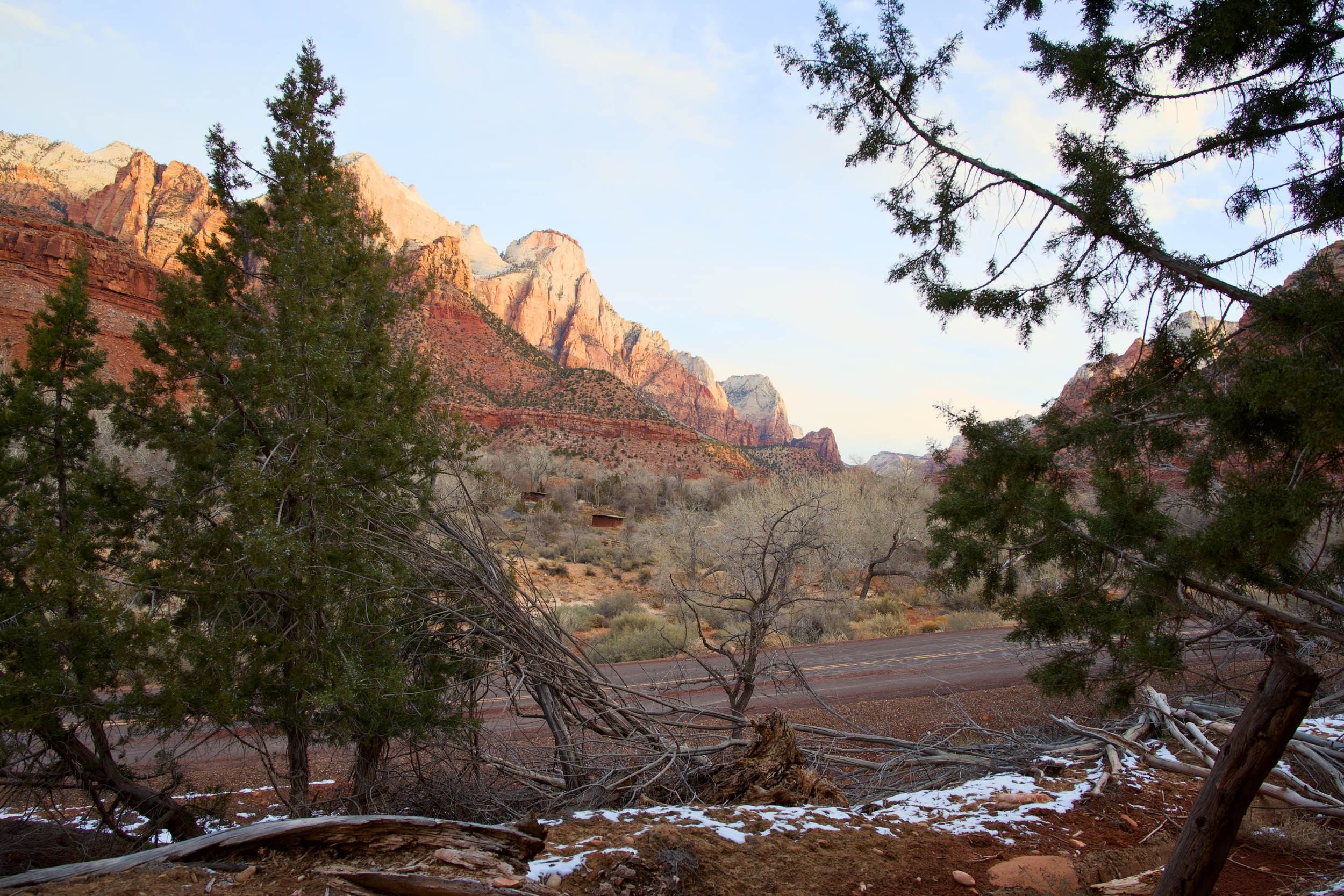
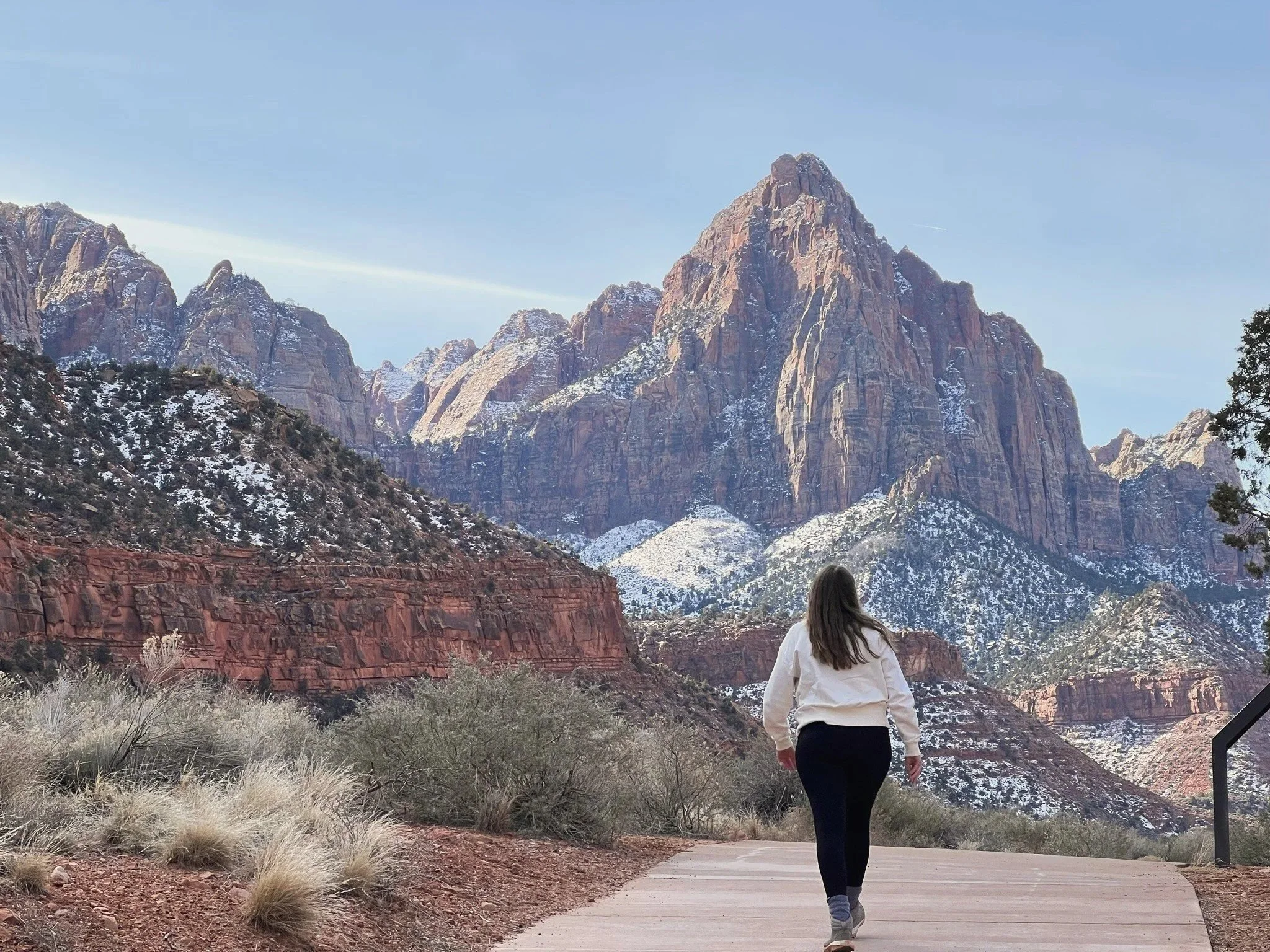
Morning (7:00 AM): Start with the Watchman Trail at sunrise. This 3-mile loop offers stunning views of Watchman Peak and the Virgin River, with relatively gentle elevation gain. The morning light on the canyon walls is spectacular, and you'll avoid crowds by going early.
Why this trail first: It's the perfect warm-up hike, long enough to feel accomplished but not so strenuous that you're exhausted for the rest of your trip.
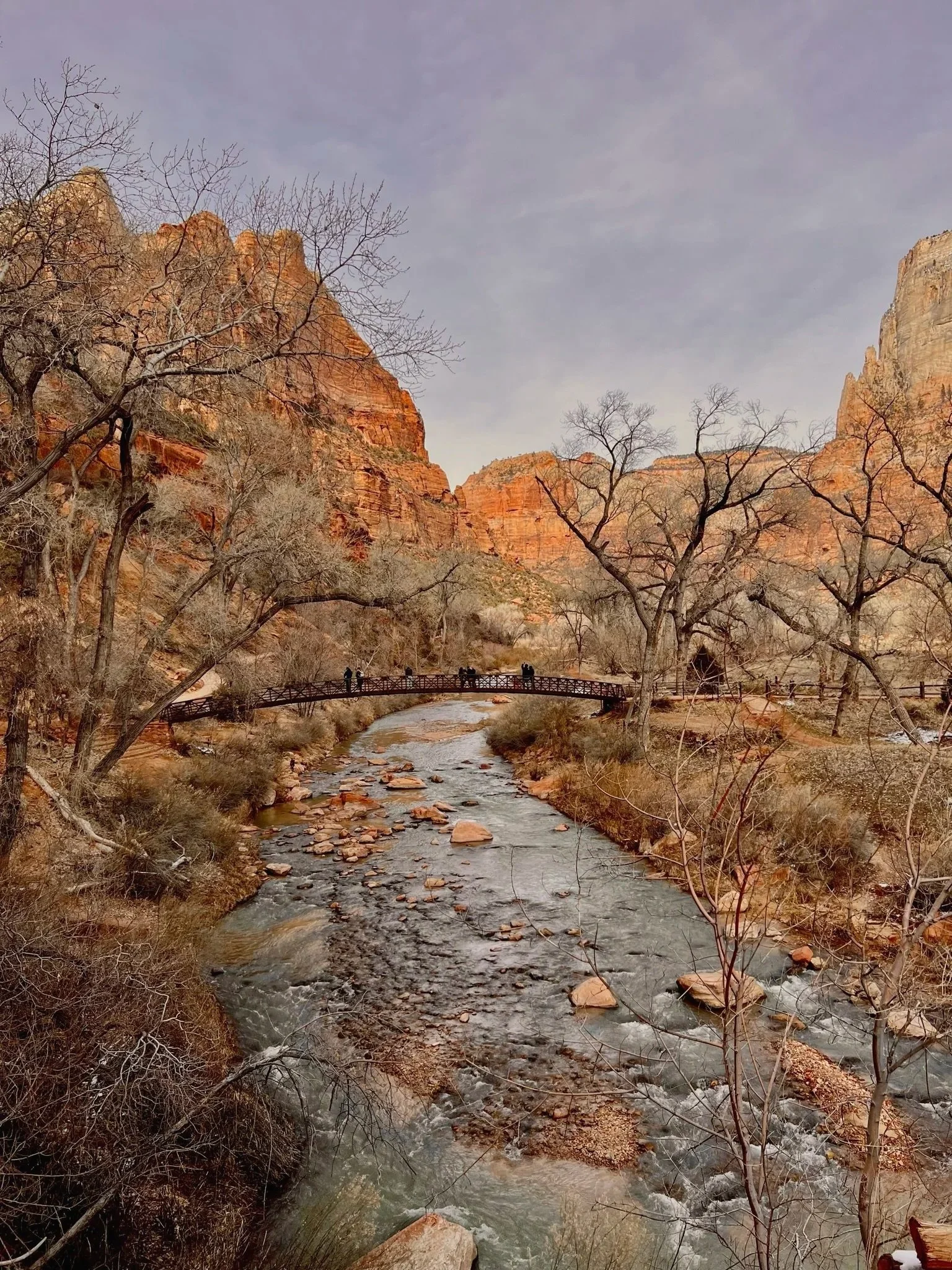
Mid-morning (10:00 AM): Walk the Pa'rus Trail from the Visitor Center. This paved, 3.5-mile path follows the Virgin River and is the only trail in Zion where bikes and dogs are allowed. It's flat, accessible, and beautiful.
Afternoon (1:00 PM): Visit the Zion Human History Museum to understand the park's cultural heritage—from ancient Puebloans to Mormon settlers. It's air-conditioned, informative, and a nice midday break.
Late afternoon (4:00 PM): Take the shuttle to Canyon Junction and walk the short trail to the bridge overlook. This is one of the best spots for sunset photos with minimal effort.
Evening: Explore Springdale. Grab dinner at Bit & Spur Restaurant (excellent Southwestern food) or King's Landing Bistro (upscale farm-to-table). Walk around town and pick up snacks for tomorrow's hikes.
Bring a daypack, reusable water bottles, trail snacks, and energy bars
Day 2: The Iconic Zion Experience
Early morning (6:30 AM shuttle): Beat the crowds to the Riverside Walk and Narrows. The Riverside Walk is a paved 2-mile trail ending at the Narrows entrance. From there, you can hike into the Virgin River as far as you're comfortable (no permit needed for the bottom section).
Narrows strategy for first-timers:
Hike 1-2 miles up the Narrows (to the first or second bend)
Water will be knee to waist-deep in most sections
Rent water shoes, neoprene socks, and a hiking stick in Springdale the day before
Bring a drybag and a waterproof phone case for your phone/camera
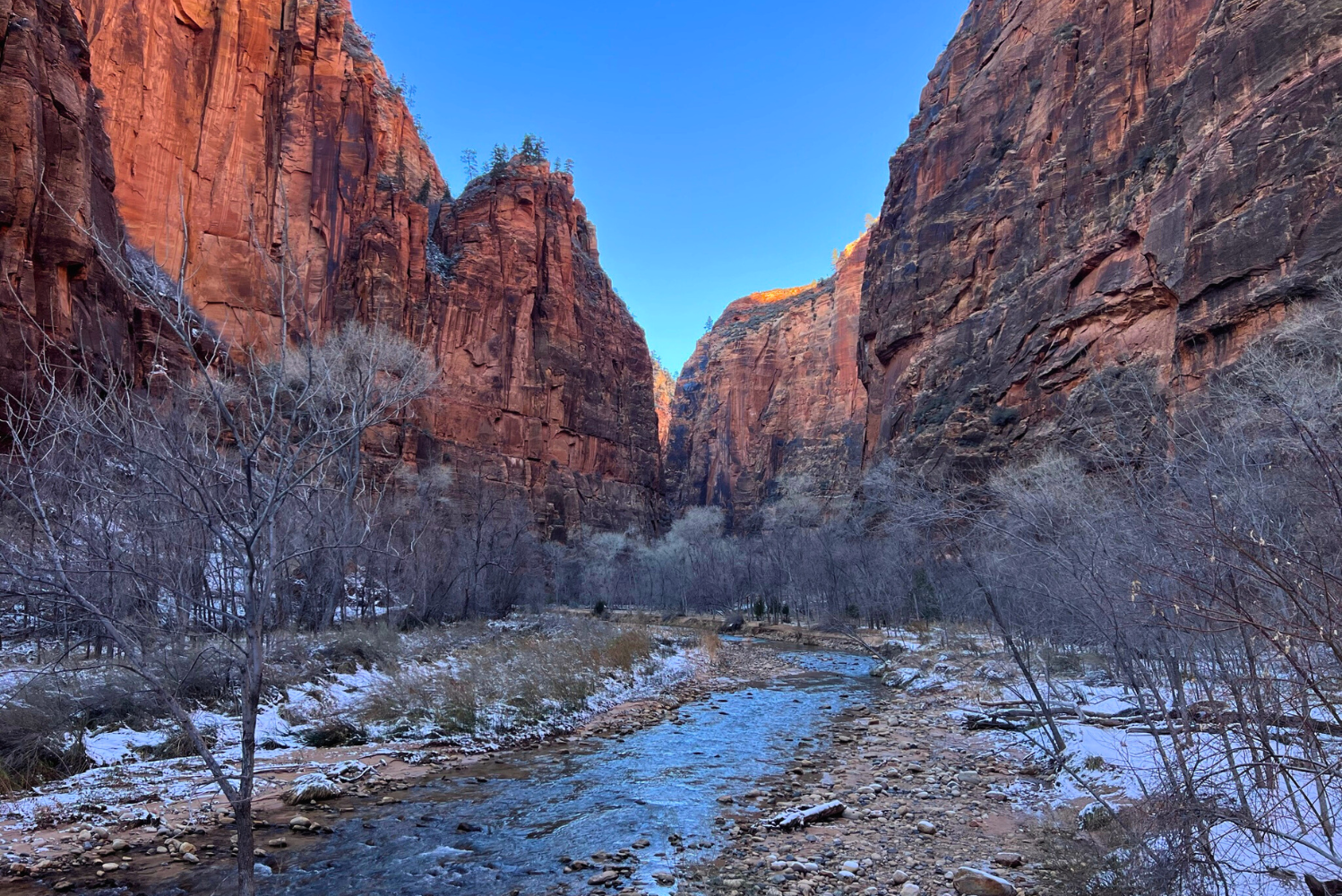
What makes it special: Walking through a river canyon with 1,000-foot walls on either side is surreal. The light filtering through the narrow slot is otherworldly.
Lunch: Bring a packed lunch to eat at the Temple of Sinawava or back in Springdale.
Afternoon (2:00 PM): Choose your own adventure based on energy levels:
Option A - Emerald Pools (moderate, 3 miles): Three-tiered trail system leading to lower, middle, and upper pools. In spring, waterfalls cascade beautifully. The upper pool requires more climbing but offers the best views.
Option B - Hidden Canyon (strenuous, 2.6 miles): This narrow trail includes chains, exposure, and a stunning hanging canyon at the end. Not for those afraid of heights, but absolutely worth it for adventurous first-timers.
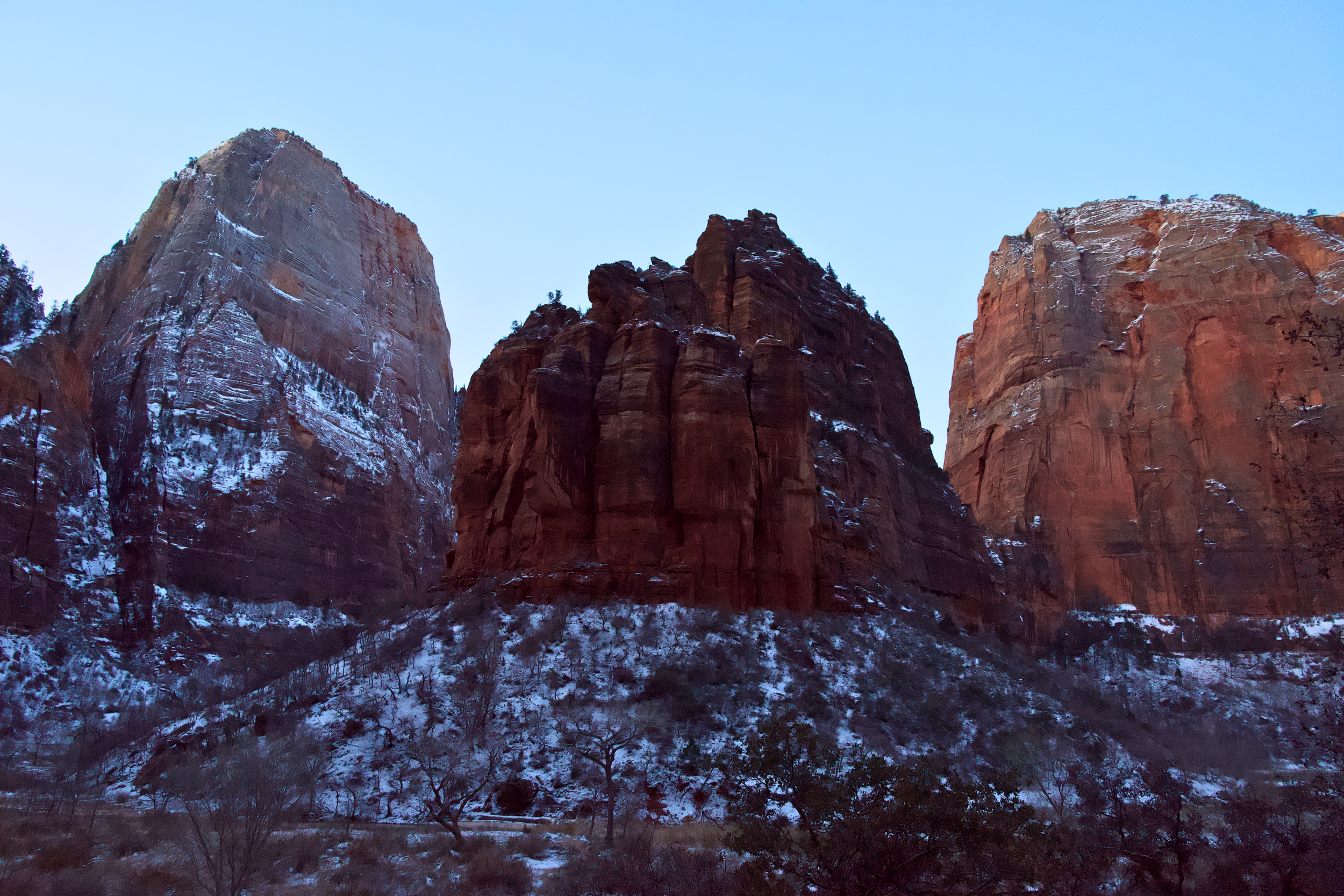
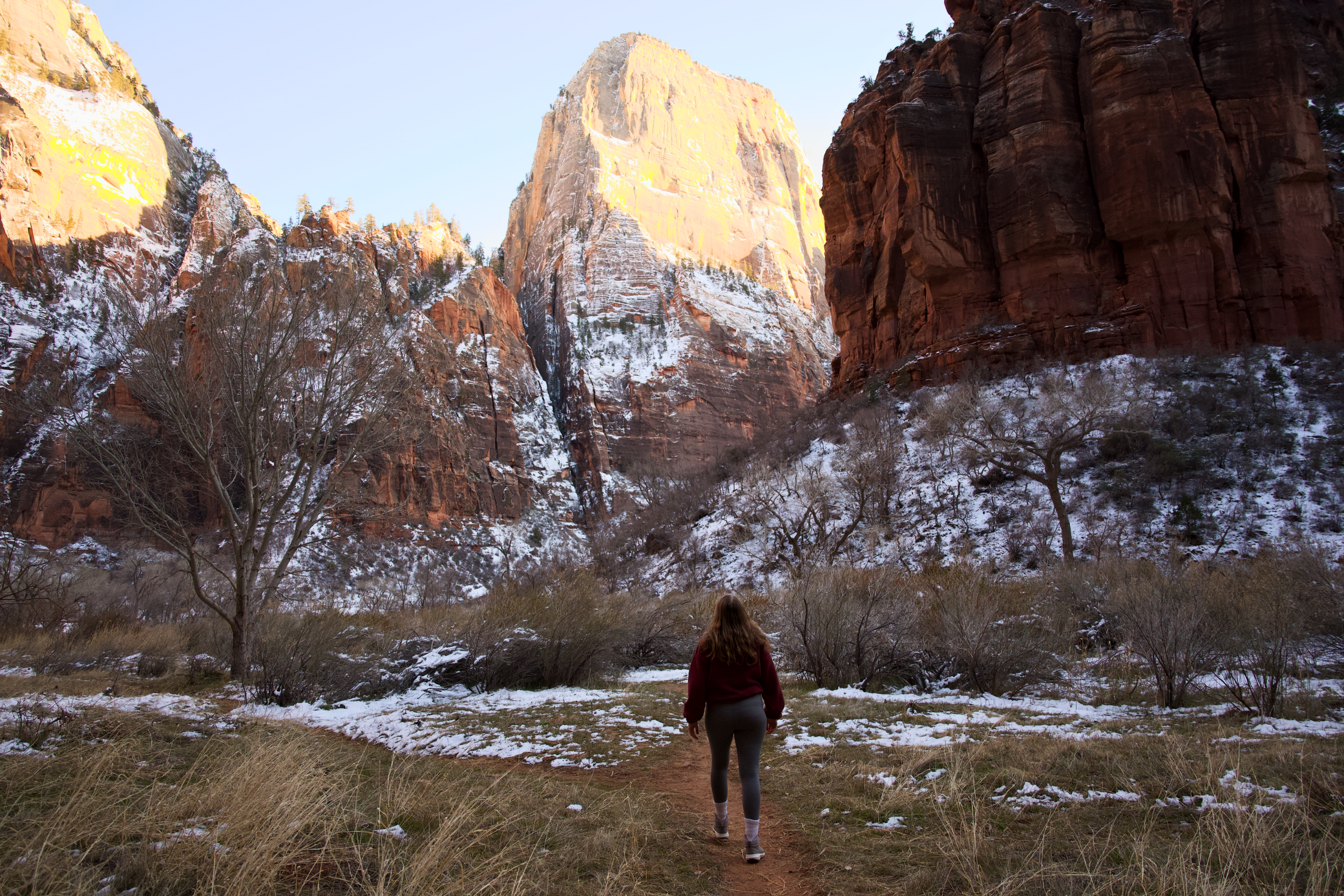
Sunset: Take the shuttle to the Court of the Patriarchs viewpoint (shuttle stop #4) for sunset. The three peaks (Abraham, Isaac, Jacob) glow brilliantly in evening light.
Day 3: The Road Less Traveled
Morning: Drive to Kolob Canyon (40 minutes from Springdale). Hike the Taylor Creek Trail to Double Arch Alcove (5 miles, 3 hours). This is your chance to experience Zion without crowds.
Pack a lunch: There are no food options in Kolob Canyon, so bring everything you need.
Afternoon: Two options:
Option A (for hikers): Drive to the East Mesa trailhead and hike Observation Point (7 miles, 4-5 hours). This gives you the best viewpoint in the park without the Angels Landing lottery or crowds.
Option B (for a relaxed afternoon): Drive the Zion-Mt. Carmel Highway through the park's east side. Stop at Canyon Overlook Trail (1 mile, 45 minutes) for stunning views. Continue to Checkerboard Mesa for unique eroded sandstone patterns. End in the town of Mt. Carmel Junction for a casual dinner.
Evening: Return to Springdale for your final night. Celebrate at Zion Brewery or Whiptail Grill.
Packing for Zion: What You Actually Need
I've refined my Zion packing list over multiple visits. Here's what genuinely matters:
The Essentials
Footwear:
Broken-in hiking boots + camp shoes (men’s & women’s hiking boots)
Water shoes or sandals for the Narrows
Comfortable walking shoes for Springdale
Clothing (layer system):
Moisture-wicking base layers (My recommendations: women's & men’s tops)
Light fleece or puffy jacket (My recommendations: women’s & men’s jackets)
Convertible hiking pants (My recommendations: women’s & men’s pants)
Rain jacket (even in "dry" seasons) (women’s & men’s rain jackets)
Buff or neck gaiter
Hydration & Nutrition:
Trail mix, energy bars, jerky
Sun Protection:
SPF 50+ sunscreen (mineral-based is better for reef-safe principles)
Lip balm with SPF
Navigation & Safety:
Downloaded offline maps (AllTrails Pro is worth it)
Portable phone charger
Headlamp (for early starts or if you misjudge timing)
Photography:
Camera with a wide-angle lens
Tripod for low-light/long exposures
Extra batteries and memory cards
Leave No Trace & Responsible Travel
Zion is loved almost to death. Here's how to minimize your impact:
On the trail:
Stay on designated trails (those "social trails" create erosion)
Pack out everything you pack in
Use the bathrooms before hitting the trail (seriously—don't be that person leaving toilet paper everywhere)
Give wildlife space (especially bighorn sheep and deer)
In town:
Support local, independent businesses over chains
Use the free town shuttle instead of driving when possible
Bring reusable bags, water bottles, coffee mugs
Water conservation:
Springdale is in the desert—water is precious
Take quick showers
Report any leaks you see
Beyond the Hikes: What Else to Do in Greater Zion
Springdale's Local Scene
Coffee:
Deep Creek Coffee - Local roaster, excellent espresso, outdoor patio
Perks! Espresso - Quick grab-and-go, friendly staff
Food:
Oscars Cafe - Best breakfast (get there early or expect a wait)
Zion Pizza & Noodle Co. - Casual, housed in an old church
Spotted Dog Cafe - Farm-to-table, located at Flanigan's Inn
Switchback Grille - Upscale dining, excellent for special occasions
Shopping:
Worthington Gallery - High-end photography and art
David J. West Gallery - Local landscape photography
Sol Foods - Gourmet grocery for picnic supplies
Canyoneering & Guided Adventures
If you want to push beyond day hiking, Zion is one of the world's premier canyoneering destinations.
What is canyoneering? Think technical slot canyon exploration involving rappelling, swimming through potholes, and navigating narrow passages. It's exhilarating but requires specialized skills and equipment.
Beginner-friendly options:
Half-day canyoneering tours through companies like Zion Adventure Company or Zion Rock Guides
Climbing clinics - Learn basics on Zion's sandstone walls
Rappelling experiences - Practice the skills in a controlled environment
Nearby Attractions (Day Trip Distance)
Coral Pink Sand Dunes State Park (45 minutes): Unique pink sand dunes perfect for photography, sandboarding, or sunset walks.
Best Friends Animal Sanctuary (40 minutes): The nation's largest no-kill animal sanctuary in Kanab. You can volunteer, take a tour, or adopt.
Bryce Canyon National Park (90 minutes): If you have extra days, the hoodoos of Bryce make a spectacular addition to your trip.
Budget Breakdown: The Real Cost of Visiting Zion
Let me break down what you'll actually spend for a 3-day trip. I'm giving you three tiers: budget, mid-range, and splurge.
Sample 3-Day Budget
BUDGET TRAVELER:
Accommodation: $60-90/night camping (Watchman Campground) = $180-270 total
Food: $40/day groceries + cooking, occasional meal out = $120
Transportation: Gas for road trip = $60
Park entrance: $35 vehicle fee (good for 7 days)
Gear rentals: Narrows gear rental = $60
Activities: Free hiking!
TOTAL: ~$455-545 for 3 days
MID-RANGE TRAVELER:
Accommodation: $200-300/night hotel in Springdale = $600-900
Food: $100/day (mix of restaurants and casual meals) = $300
Transportation: Car rental + gas = $200
Park entrance: $35
Gear rentals: Narrows gear + any extras = $80
Activities: One guided tour = $150
TOTAL: ~$1,365-1,665 for 3 days
SPLURGE TRAVELER:
Accommodation: $400+/night luxury lodge = $1,200+
Food: $150/day (nice dinners, fancy coffee) = $450
Transportation: SUV rental + gas = $350
Park entrance: $35
Gear: Buy instead of rent = $200
Activities: Private guide, canyoneering, photography tour = $500
TOTAL: ~$2,735+ for 3 days
Money-Saving Tips
Get the America the Beautiful Annual Pass ($80): If you're visiting 3+ national parks in a year, this pays for itself. It covers entrance fees for all federal recreation sites.
Where to Buy:
Online at Recreation.gov (ships to your home)
At any park entrance station (but lines can be long)
REI stores (convenient if you need gear too)
Camp instead of hotel: Watchman and South Campgrounds are beautiful, well-maintained, and save you $100+ per night.
Cook most meals: Springdale has a grocery store (Sol Foods). Making breakfast and packing lunches saves serious money.
Visit in shoulder season: Lodging prices drop 30-40% in March-April and October-November compared to peak summer.
Skip the permit lottery stress: Free hikes like Observation Point (via East Mesa) offer equally stunning views without the $6 Angels Landing permit fee or lottery hassle.
Rent gear locally: Don't buy water shoes for the Narrows if you'll only use them once. Rent from Zion Adventure Company or Zion Outfitter for $20-30.
Zion National Park Frequently Asked Questions
-
For first-time visitors, I recommend 3 days minimum. This gives you time for 2-3 major hikes, exploration of Springdale, and a day trip to lesser-known areas like Kolob Canyon. If you only have 2 days, you can still see highlights, but you'll feel rushed. Got 4-5 days? Perfect for adding canyoneering, East Zion exploration, or a day trip to Bryce.
-
No! Most day hikes require no permits whatsoever. You can freely hike Emerald Pools, Riverside Walk, the Narrows (from the bottom), Watchman Trail, and all Kolob Canyon trails without any reservations. Permits are only required for Angels Landing (lottery system) and overnight backpacking.
-
Absolutely. The scenic drive through Zion Canyon is stunning. You can take the shuttle to viewpoints like the Temple of Sinawava, Court of the Patriarchs, and Weeping Rock (though the trail to Weeping Rock is currently closed due to rockfall). The Pa'rus Trail is paved and flat, perfect for all ability levels. Plus, there's great dining and shopping in Springdale.
-
October is one of the best months to visit—warm days, cool nights, fall colors, and significantly fewer crowds than summer. Early October can still be busy on weekends, but nothing like July or August. Late October sees even fewer visitors. You'll still want to start hikes early, but you won't be stuck in massive shuttle lines.
-
For most visitors, the South Entrance (near Springdale) is best. It provides access to the main canyon, shuttle system, and most popular trails. The East Entrance is great if you're staying in Mt. Carmel or want to hike East Zion trails like Observation Point via East Mesa. Kolob Canyon has its own entrance off I-15 and is perfect for avoiding main canyon crowds.
-
During shuttle season (March-November), you cannot drive private vehicles on Zion Canyon Scenic Drive—you must take the shuttle. However, from December through February, the shuttle doesn't run, and you can drive your own car and park at trailheads. You can always drive the Zion-Mt. Carmel Highway through the east side of the park (includes the famous tunnel).
-
Angels Landing is spectacular, but it's not essential for a great Zion experience—especially for first-timers. The permit lottery adds stress, the crowds can be overwhelming, and the exposure on chains isn't for everyone. I genuinely believe Observation Point offers better views without the hassle. That said, if you win the lottery and are comfortable with heights, it's an unforgettable hike.
-
For most people, Angels Landing wins for scariest due to the final chain section with 1,000-foot drops on both sides. Hidden Canyon also has chains and exposure. If you're afraid of heights, stick to trails like Emerald Pools, Riverside Walk, or Kolob Canyon's Taylor Creek Trail—all stunning without the vertigo.
The Scenic Route Traveler inspires intentional travel through storytelling, hidden gems, and culturally rich experiences around the world.
-
I’m Erin, the voice behind Scenic Route Traveler, sharing intentional travel stories and guides from around the globe.
-
We deliver travel guides and storytelling through YouTube, social media, photography, and digital products designed for fellow travelers.
-
If you’re new here: this is a space for travelers who care more about how a place feels than how it looks on a checklist. You’ll find guides, stories, and resources designed to help you slow down and travel with intention.